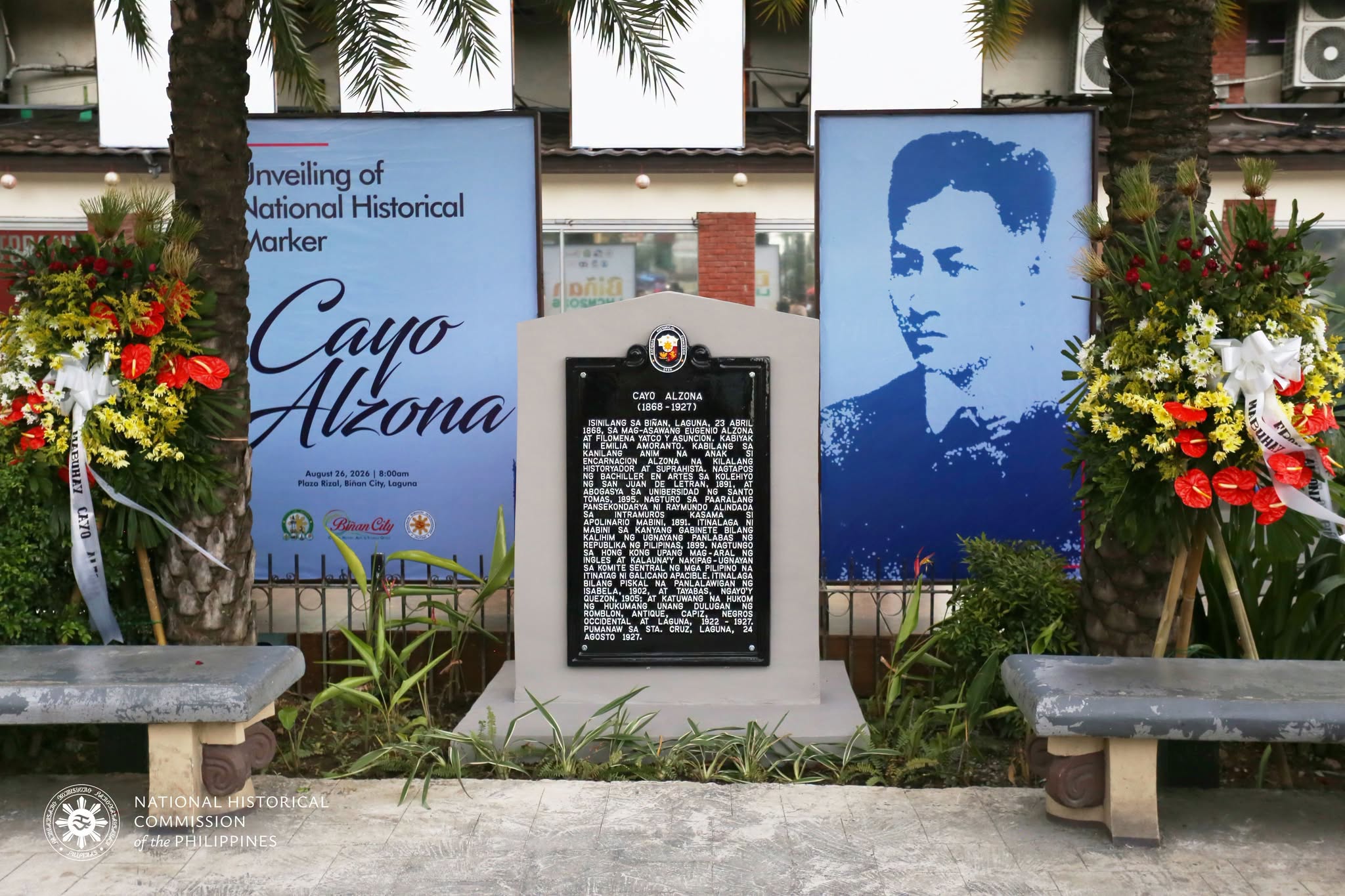

BIÑAN, LAGUNA — The National Historical Commission of the Philippines (NHCP) unveils a historical marker honoring Cayo Alzona, a Biñan-born educator, lawyer, writer, and government official who played a role in the Philippine revolutionary government, on August 26, 2026.
Led by NHCP Chair Regalado Trota Jose Jr., the unveiling takes place at 7:30 a.m. in Biñan, Laguna, recognizing Alzona’s contributions to the country’s history and public service.
The marker, titled “Cayo Alzona (1868–1927),” details his life, education, government service, and connection to some of the country’s prominent historical figures.
According to the marker, Alzona is born in Biñan on April 23, 1868, to Eugenio Alzona and Filomena Yatco y Asuncion. He is one of six children, including Encarnacion Alzona, who later becomes a noted historian and suffragist.
Alzona earns his Bachiller en Artes from Colegio de San Juan de Letran in 1891 and completes his law studies at the University of Santo Tomas in 1895.
He also teaches at the secondary school of Raymundo Alindada in Intramuros, where he works alongside Apolinario Mabini in 1891.
His association with Mabini later brings him into government service. In 1899, Mabini appoints Alzona to his cabinet as Secretary of Foreign Affairs of the Republic of the Philippines.
Alzona subsequently travels to Hong Kong to study English and later establishes connections with the Central Committee of Filipinos founded by Galicano Apacible.
His government service continues under the American colonial administration. He serves as provincial fiscal of Isabela in 1902 and Tayabas, now Quezon, in 1905. From 1922 to 1927, he serves as an associate judge of the Court of First Instance in several provinces, including Romblon, Antique, Capiz, Negros Occidental, and Laguna.
Alzona dies in Santa Cruz, Laguna, on August 24, 1927.
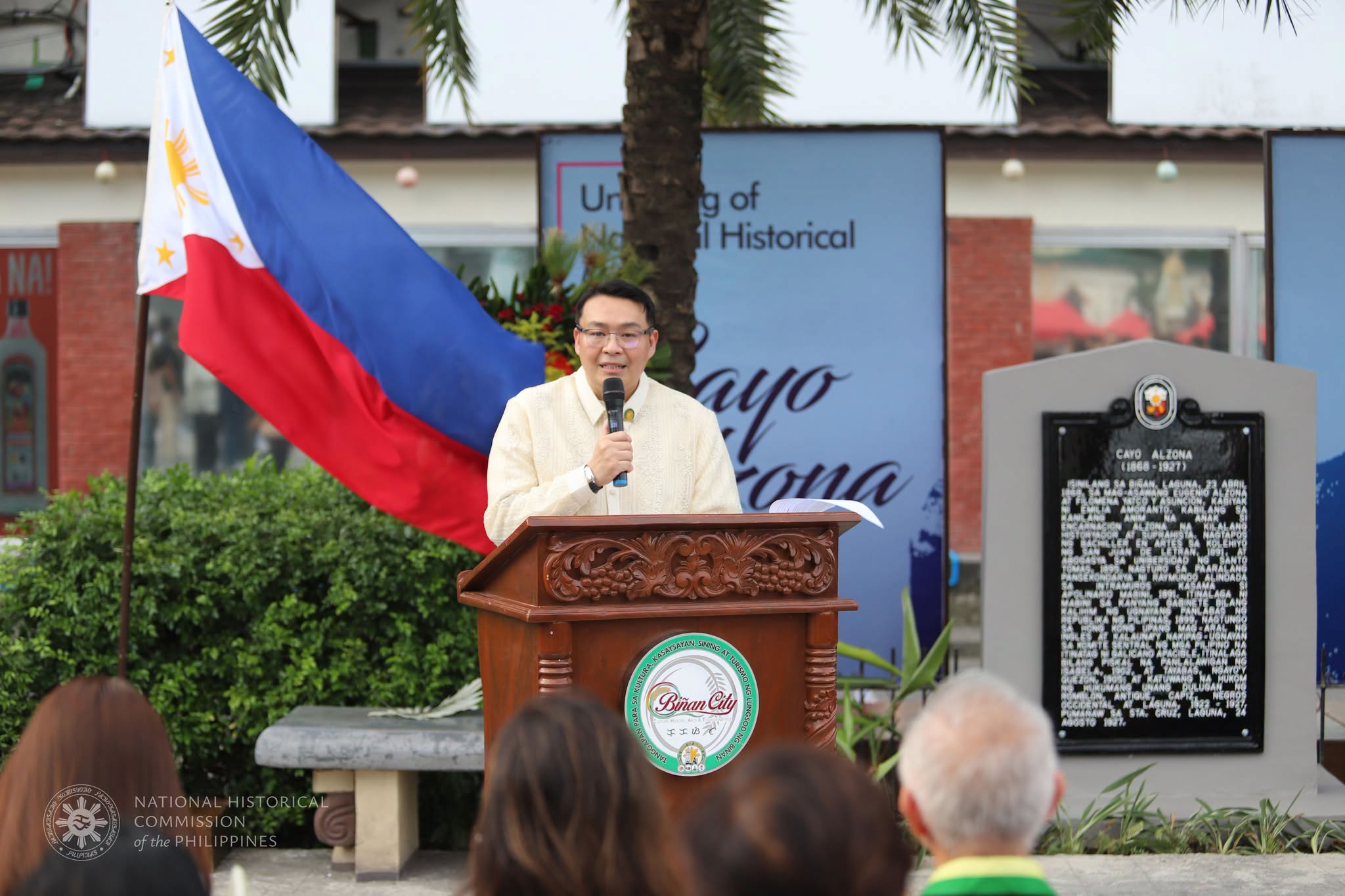
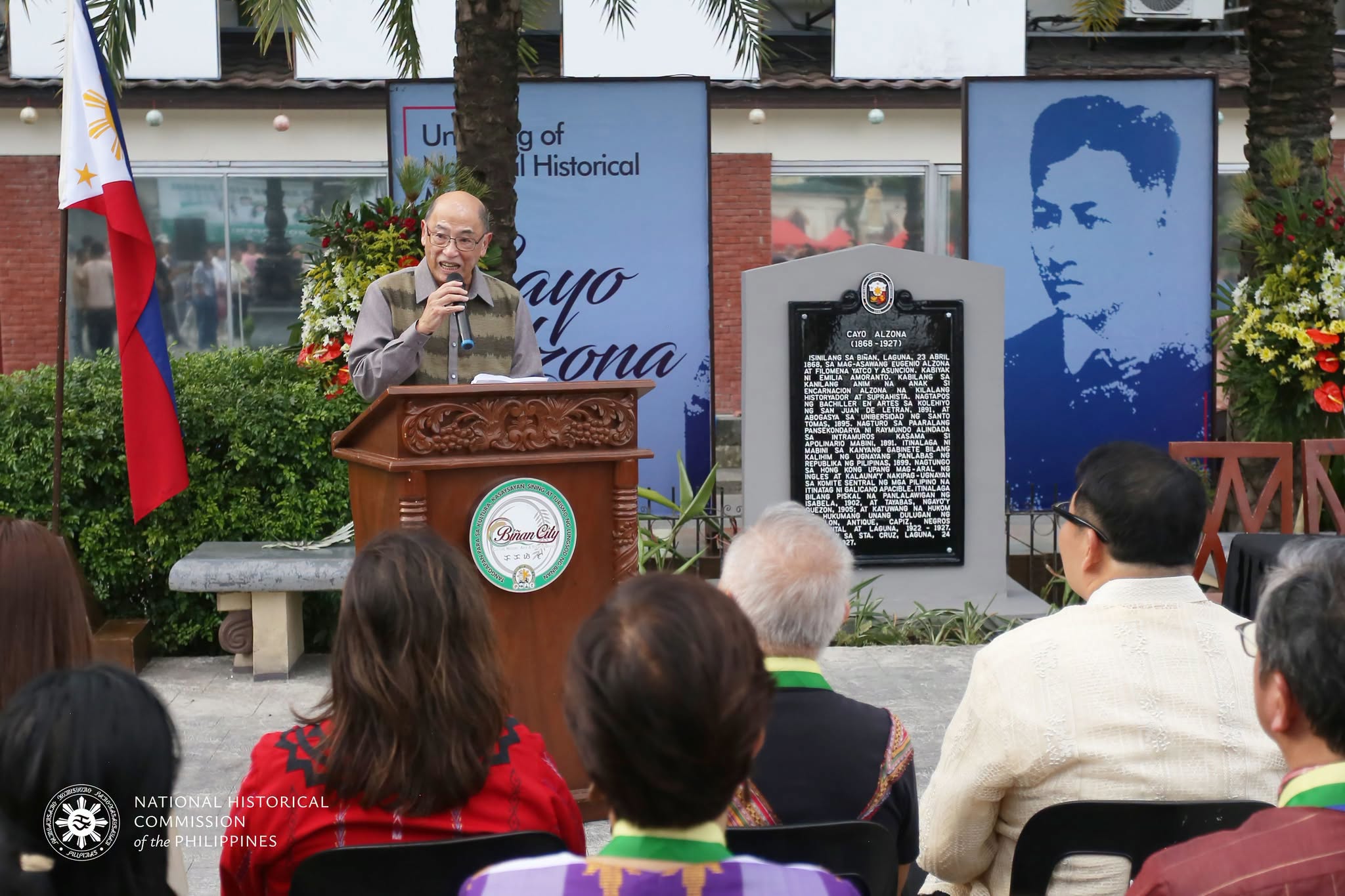
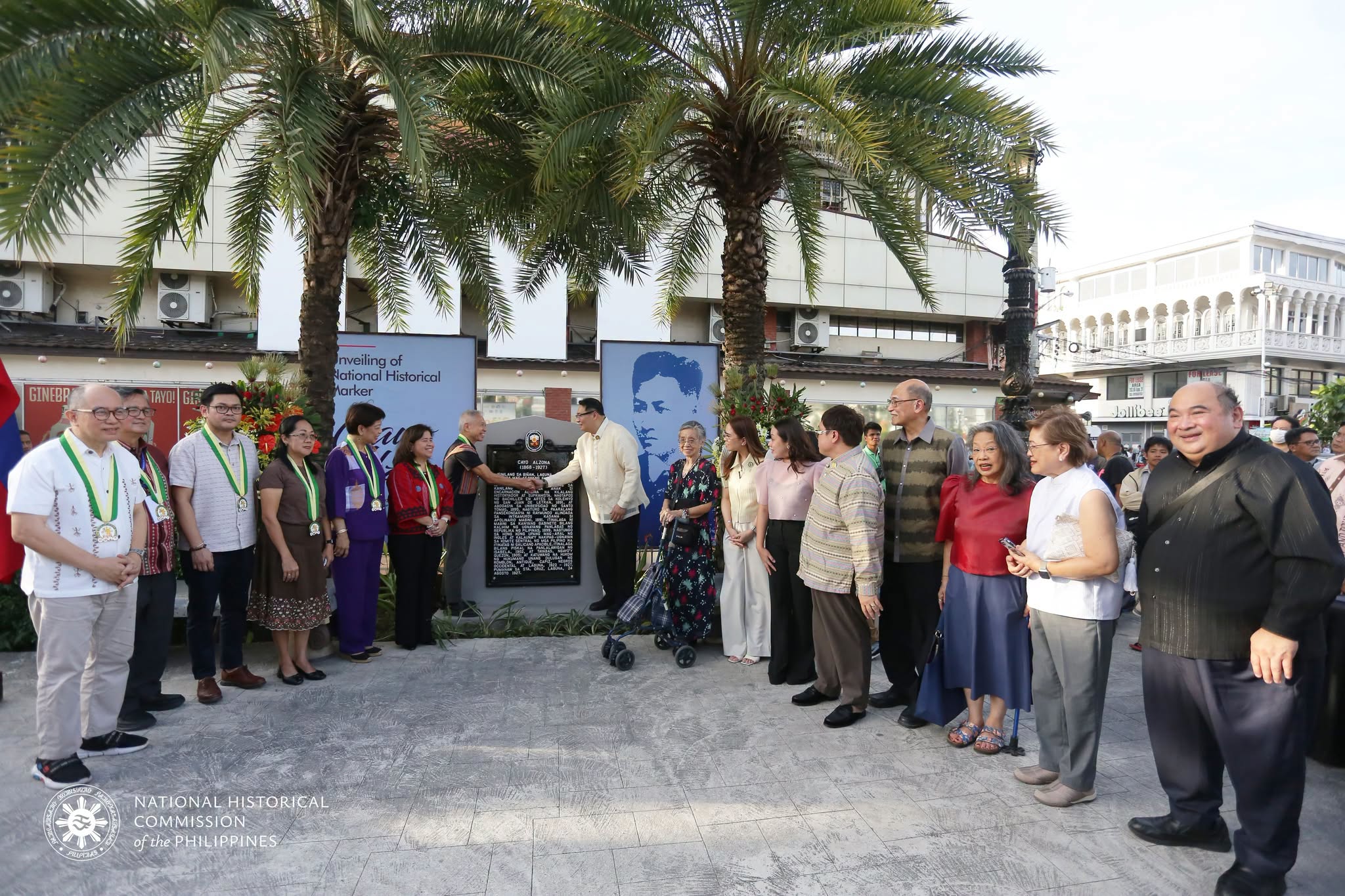
During the ceremony, NHCP Chair Jose Jr. presents the historical marker, while Biñan Mayor Angelo Alonte, MPA, delivers the city’s acceptance speech. The program also features a message from the Alzona family, followed by the unveiling and signing of certificates.
The unveiling comes as part of efforts to preserve and promote the country’s historical heritage by recognizing individuals and places that contributed to Philippine history.