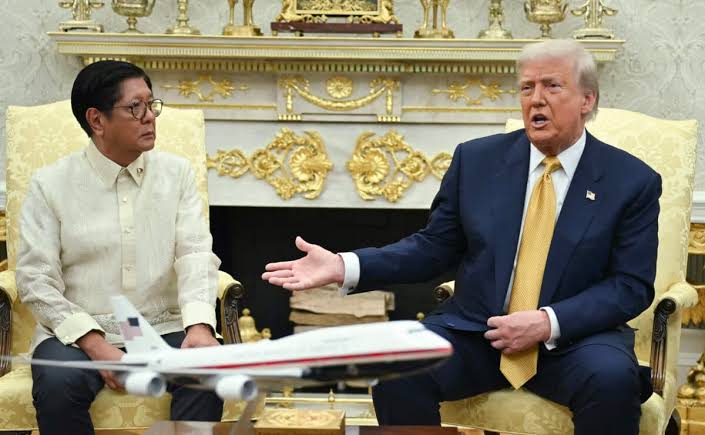

President Donald Trump left Washington this week on a four-day Asian tour. It begins with a meeting of Southeast Asian leaders in Manila and ends with talks in Shenzhen, China, where he is due to meet Chinese President Xi Jinping. Al Jazeera reported that a three-way summit with Russian President Vladimir Putin is also expected, though the CFR analysis describes Putin’s attendance as only a possibility.
Trump travels between November 16 and 19, soon after the midterm elections. In Manila he will attend a special U.S.-ASEAN summit and hold one-on-one meetings. He will then go to Shenzhen for the Asia-Pacific Economic Cooperation (APEC) leaders’ summit.
An ambitious agenda
According to Joshua Kurlantzick, a senior fellow for Southeast Asia and South Asia at the Council on Foreign Relations, the White House wants to sign regional governments up to “Pax Silica.” This is a U.S.-led coalition on export controls and investment screening for chips, AI, critical minerals and data centers. Kurlantzick says that although it is not framed this way, the initiative is effectively meant to keep China from obtaining top-tier chips and building the most advanced AI models.
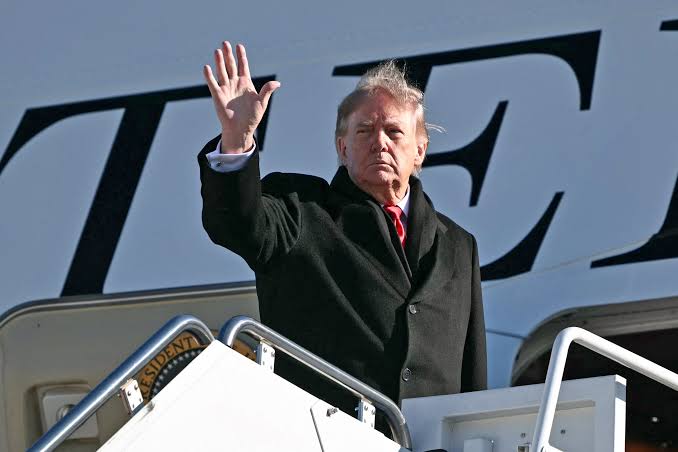
Washington may also press Southeast Asian countries to buy full “stacks” of American AI technology. It may announce new trade deals with Vietnam and possibly Thailand.
With Xi, Trump is expected to seek concrete follow-through on an AI hotline the two sides have already agreed in principle to create. He is also expected to seek a longer extension of the current trade truce and the truce on rare-earth exports. The possible three-way meeting with Putin would reportedly cover the Iran war, Ukraine and other issues.
Analysts see a cool reception
Kurlantzick argues that the trip is unlikely to yield much, and that even its modest goals could be rebuffed. He says Trump’s second-term Asia policy is broadly unpopular in the region, mainly because of tariffs on allies and partners and cuts to defense support. Recent visits by Secretary of State Marco Rubio and Defense Secretary Pete Hegseth reportedly drew angry responses. Some Asian leaders hope the incoming change in Congress’s majority will make Washington more deferential.

On technology, he points to several obstacles. Turmoil at U.S. AI firms, Washington’s light-touch approach to AI regulation and the growth of data centers serving Chinese companies in countries such as Malaysia all weigh against Pax Silica. Five Southeast Asian states have also joined a Beijing-led AI body that offers an alternative to the U.S. approach. Cheaper Chinese AI models are winning customers across Asia, and Kurlantzick notes that some American firms are using them too.
He also says any trade announcements are likely to be frameworks rather than binding deals. Southeast Asian governments doubt Washington will follow through. A deal reached with Malaysia last year has still not taken effect, and Vietnamese officials feel they have already conceded all they can.
Congress and Taiwan
Kurlantzick says Trump will soon face a Congress likely to oppose any understanding with Xi and Putin. Many Republicans, as well as Democrats, are skeptical of cooperating with Moscow, and 85 percent of Americans view Russia unfavorably, citing Pew Research data. Staffers told him there may be enough support to push through a $14 billion arms sale to Taiwan, even over a presidential veto. Trump has delayed that sale and, in Kurlantzick’s words, treated Taiwan as a bargaining chip.
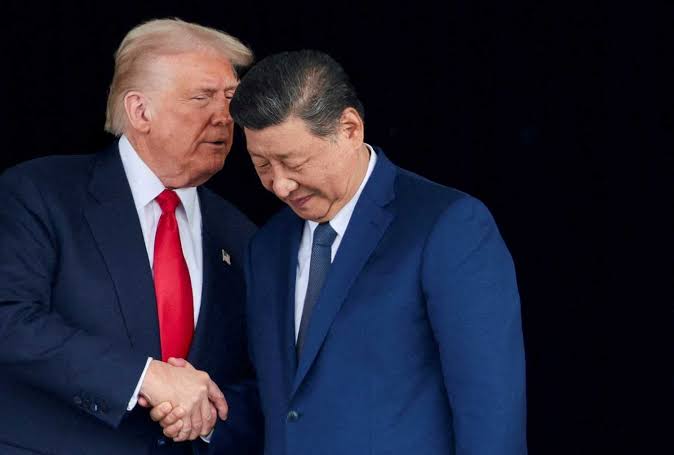
He expects Xi to press Trump for a clearer statement opposing Taiwanese independence, and says Trump could agree given his softer approach to Beijing over the past year. Any gains on rare earths may be limited, since China is still slow to let them out of the country.
Pressure on allies
The summit comes as China steps up pressure in the South China Sea. Kurlantzick lists fighter jets buzzing Philippine aircraft, boats being rammed, and a blockage of resupply to the grounded BRP Sierra Madre at Second Thomas Shoal. The Philippines is seeking firmer security guarantees, but Kurlantzick says it is unlikely to get them. He says Philippine President Ferdinand Marcos Jr., the region’s most pro-American leader, has grown disappointed and has already begun shifting toward Beijing.
In Northeast Asia, he says, allies are boosting defense spending and weighing nuclear options. Japan and South Korea could walk back investment pledges, including a possible South Korean stake in an Alaska gas project.
Sources: Al Jazeera (Nov. 16, 2026); Council on Foreign Relations analysis by Joshua Kurlantzick (Nov. 15, 2026).