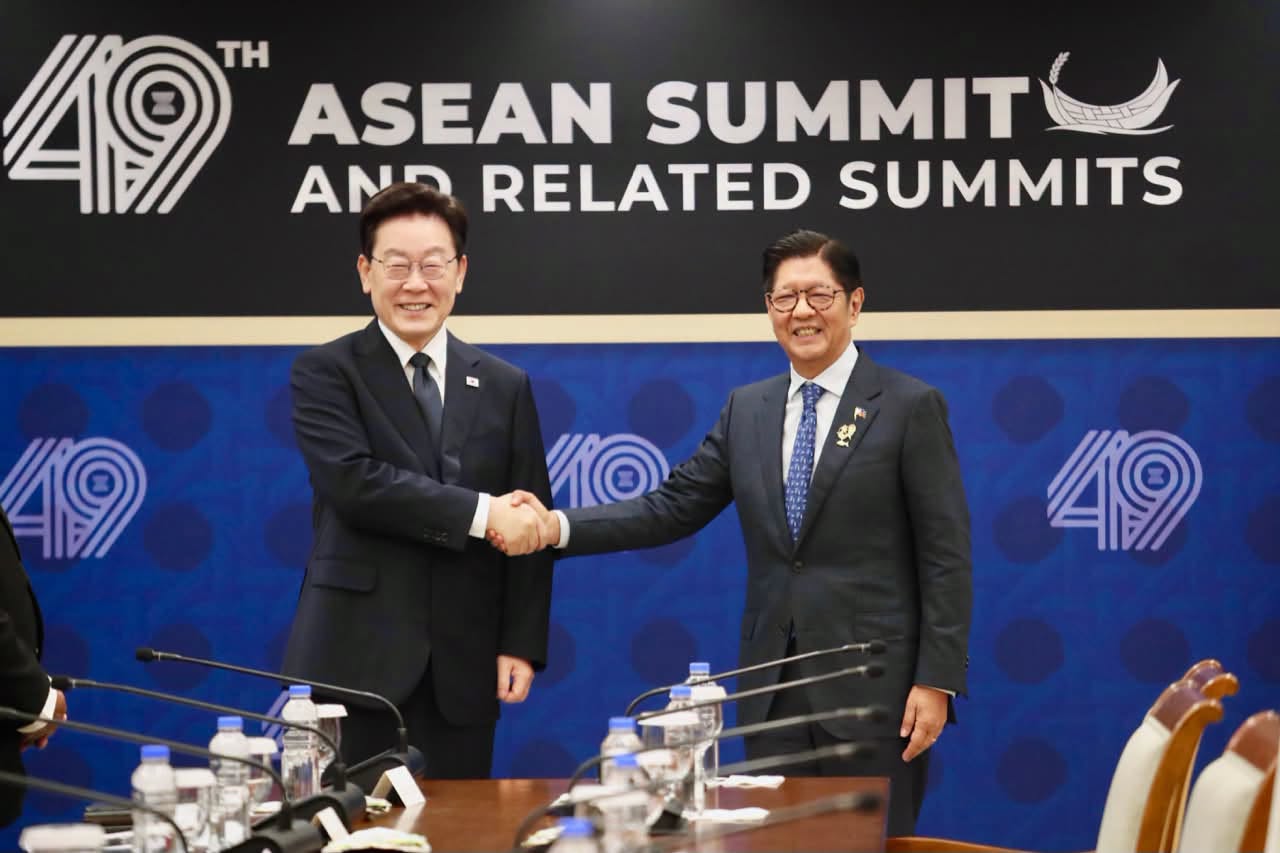

MANILA, Philippines — The Philippines and the Republic of Korea (South Korea) have reaffirmed their commitment to strengthening bilateral relations, with both countries agreeing to expand cooperation in defense, artificial intelligence (AI), shipbuilding, nuclear energy, space technology, and other strategic industries.
The agreement followed a bilateral meeting between President Ferdinand “Bongbong” Marcos Jr. and South Korean President Lee Jae Myung on November 16, 2026, at the Philippine International Convention Center (PICC) in Manila, on the sidelines of the 49th Association of Southeast Asian Nations (ASEAN) Summit and Related Summits.
The meeting marked the third engagement between the two leaders and highlighted their shared commitment to advancing the Philippines-Republic of Korea Strategic Partnership.
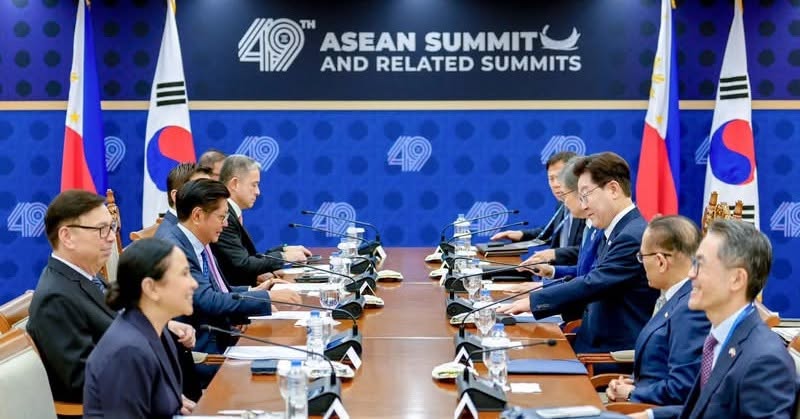
According to South Korean officials, both leaders agreed to deepen existing cooperation in defense manufacturing and infrastructure while exploring new opportunities in emerging industries, including artificial intelligence, shipbuilding, nuclear power, aerospace, and disaster management.
The discussions also came as bilateral trade between the two countries reached $21.3 billion during the first nine months of 2026, surpassing their previous annual record. South Korea also expressed interest in expanding the presence of its companies in the Philippine market.
NEW AGREEMENTS ON SCIENCE AND DEVELOPMENT
As part of the summit, the Philippines and South Korea signed two bilateral cooperation documents aimed at strengthening development initiatives and technological collaboration.
The first was a supplementary arrangement to the Basic Agreement on Grant Aid, intended to provide greater legal stability for the Korea International Cooperation Agency (KOICA) office in the Philippines and support the implementation of development assistance projects.
The second was a Memorandum of Understanding (MOU) on Strengthening Science and Technology Cooperation, which establishes a more structured framework for collaboration between the two countries.
The agreement covers potential cooperation in advanced materials, biotechnology, nanotechnology, data analysis, artificial intelligence, and smart agriculture, including joint research, personnel exchanges, and educational activities.
These initiatives are expected to strengthen knowledge-sharing and encourage technology development that can support the Philippines’ long-term economic and industrial priorities.
EXPANDING DEFENSE AND SECURITY COOPERATION
Beyond economic and technological partnerships, both leaders also recognized the importance of strengthening defense and security cooperation amid evolving regional challenges.
South Korea expressed its willingness to share its experience in developing its domestic defense industry, while exploring opportunities for technological collaboration, joint production, maintenance and repair services, and specialized training.
The partnership builds on decades of defense cooperation between the two countries, including South Korea’s historical support for the Philippines during the Korean War.
President Lee also highlighted the importance of addressing transnational crimes, particularly online scams and other cross-border criminal activities, through stronger coordination among law enforcement agencies.
The cooperation between the Korean National Police Agency and ASEAN Chiefs of Police (ASEANAPOL) is among the initiatives intended to improve regional investigative coordination and public safety.
STRENGTHENING ECONOMIC AND PEOPLE-TO-PEOPLE TIES
The growing partnership also extends to trade, tourism, education, and cultural exchanges.
South Korea remains one of the Philippines’ important economic and tourism partners, with millions of people traveling between the two countries annually.
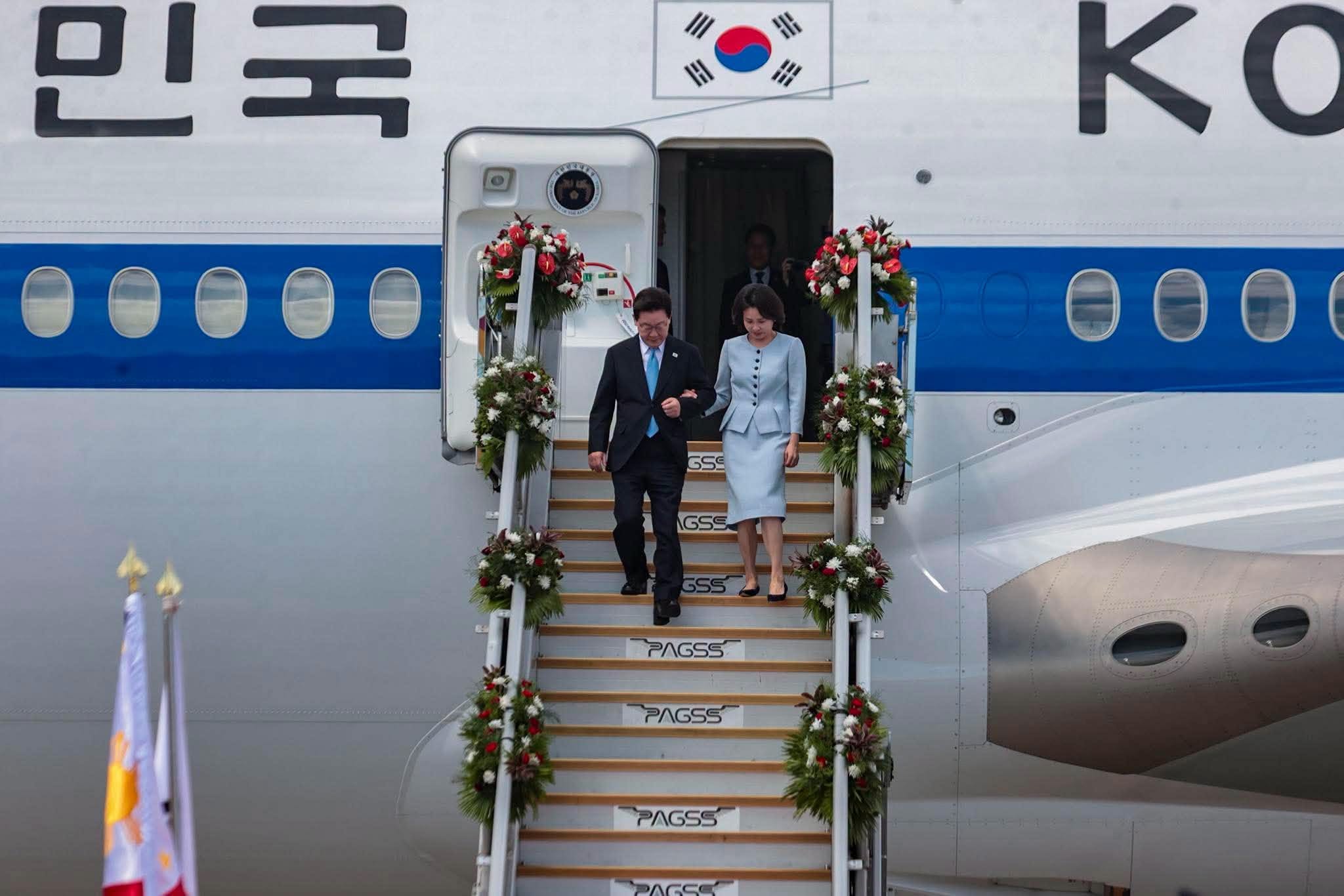
President Lee expressed his administration’s commitment to facilitating people-to-people exchanges, including efforts to streamline visa procedures for Filipino group tourists.
He also recognized the Philippines’ potential in the cultural and creative industries, proposing greater collaboration in cultural productions, creative partnerships, and exchanges between artists and industry professionals.
As the two nations mark 77 years of diplomatic relations, their renewed commitment reflects an effort to move beyond traditional cooperation and establish stronger partnerships in industries that will shape their economic and technological future.
With expanded collaboration in defense, trade, infrastructure, and emerging technologies, the Philippines and South Korea are looking to translate their longstanding friendship into concrete opportunities for shared growth, innovation, and regional stability.
Sources: The Philippine Star, Yonhap News Agency, and Philippine News Agency.