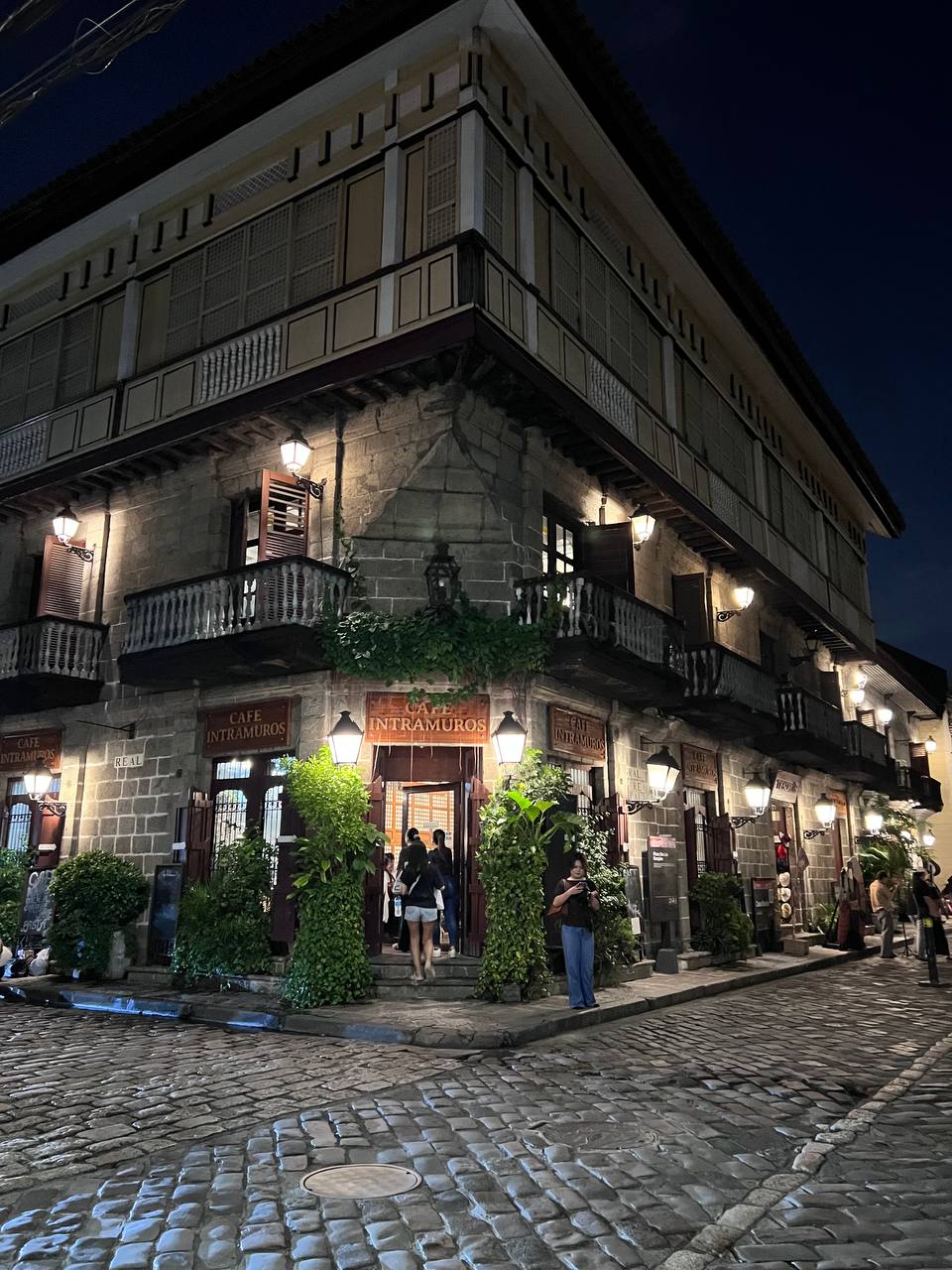

There is something about Intramuros when the sun begins to set.
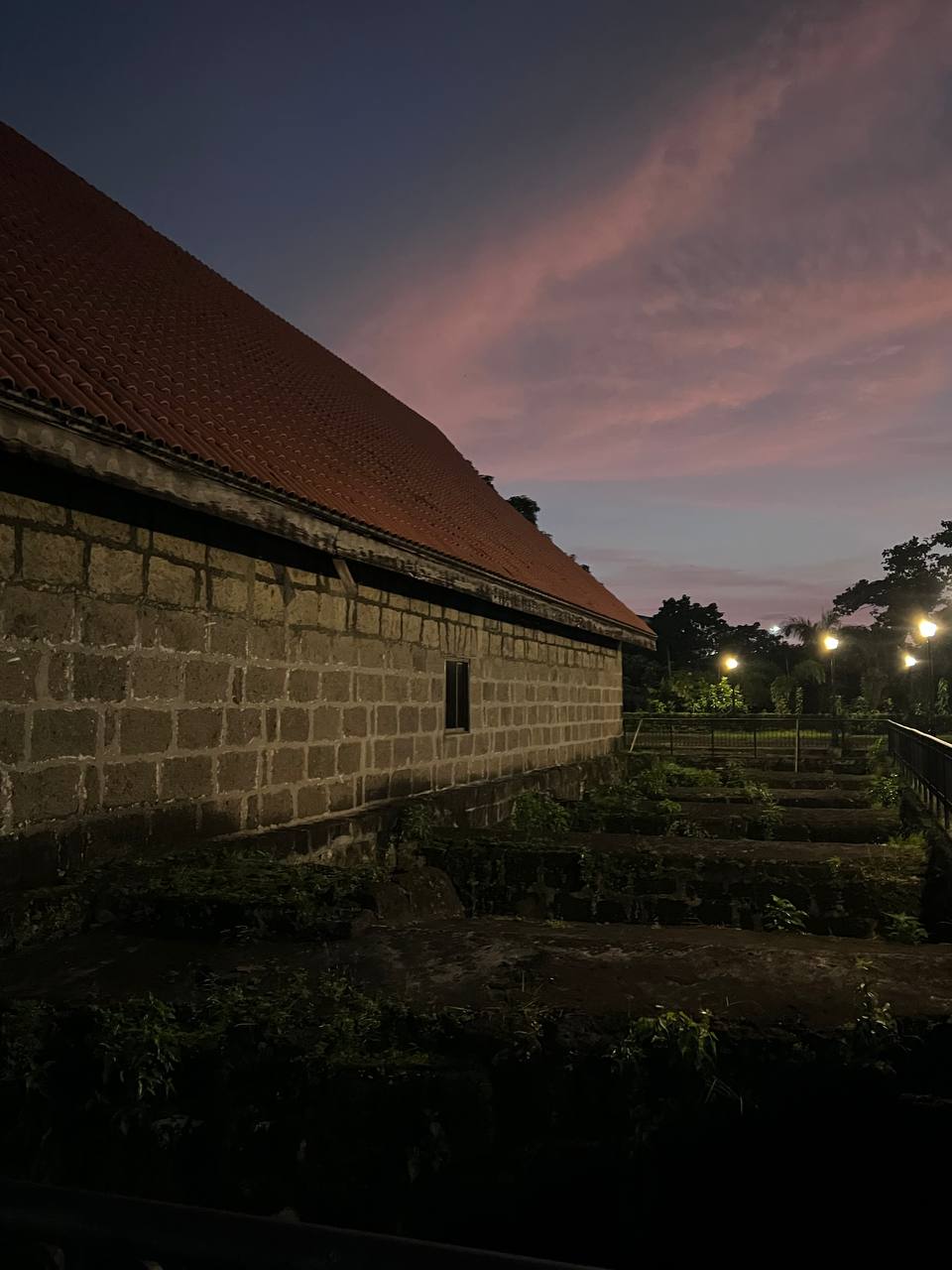
I’ve been to Intramuros many times, but visiting the Walled City from around four in the afternoon until nightfall always feels different. As the afternoon heat slowly fades and the golden light falls over its centuries-old walls, the atmosphere begins to change. The streets become calmer, the lamps start to glow, and familiar landmarks seem to take on an entirely different character.
For some, walking around Intramuros at night can feel scary. With its old stone walls, dimly lit corners, centuries-old buildings and countless stories from the past, it is easy to understand why. But for me, it is the opposite. Instead of fear, I feel a strange sense of comfort and nostalgia.
It is the kind of nostalgia that is difficult to explain, especially when you are standing in a place that existed long before you did. Somehow, when evening comes to Intramuros, it feels as though the distance between the Manila of today and the Manila of centuries ago becomes a little smaller.
At around four in the afternoon, the Walled City is still bustling. Students walk along the streets, tourists take photographs, cyclists pass by, and groups of friends search for cafés and places to eat. But as sunset approaches, everything gradually changes. The sky turns golden before fading into shades of blue, the afternoon heat becomes a cooler evening breeze, and one by one, the lights surrounding the historic structures begin to illuminate the city. For a moment, modern Manila seems farther away.
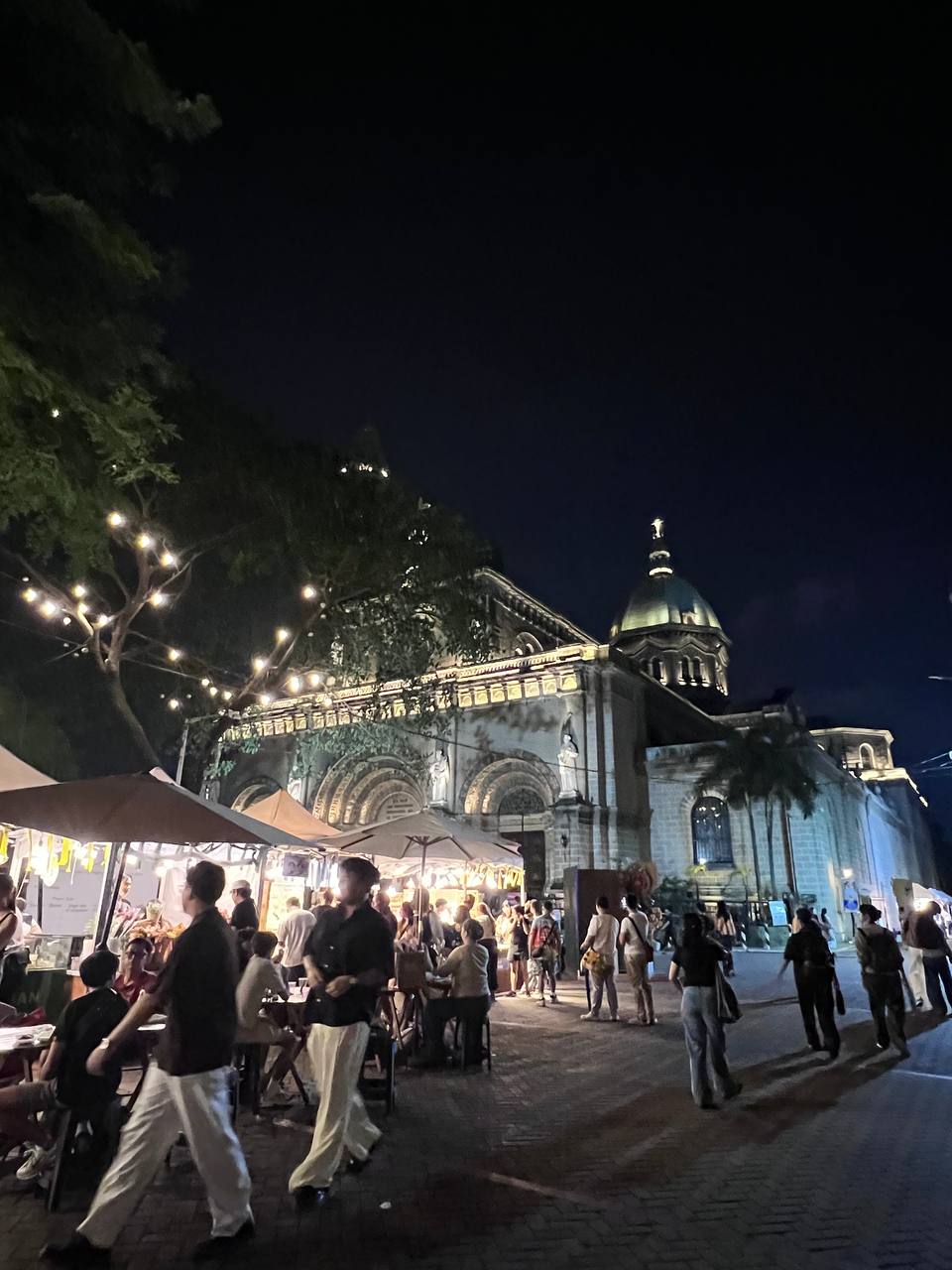
You still hear conversations and passing vehicles. People are taking photos with their smartphones, cafés are serving customers, and visitors are sharing their experiences online. These are unmistakably scenes of present-day Manila. Yet surrounding all of this are walls, churches, plazas and fortifications that have witnessed generations of Filipinos before us. That contrast is what makes Intramuros at night so beautiful. It feels like the past and present are meeting somewhere between sunset and darkness.
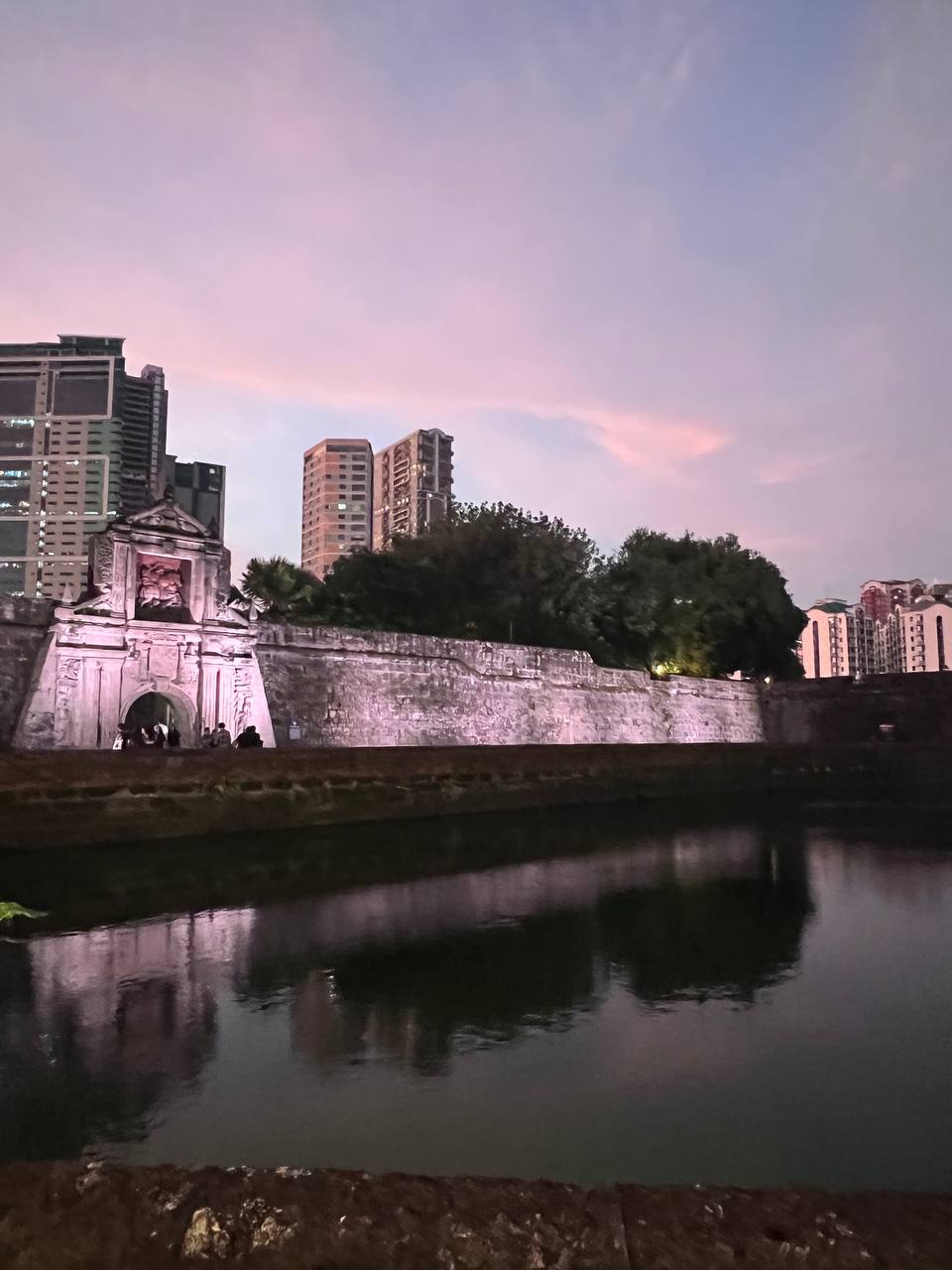
Among all the places inside Intramuros, Fort Santiago has a particularly different atmosphere once evening arrives. Walking through its gates during the daytime already gives you a strong sense of history, but experiencing the fort after sunset feels much more reflective.
The old stone pathways and walls are illuminated in some places while other corners slowly disappear into shadow. Trees sway in the evening breeze, and as you walk farther into the fort, you become increasingly aware of just how much history surrounds you. There is a certain chill when walking through Fort Santiago at night, but for me, it is a good kind of chill.
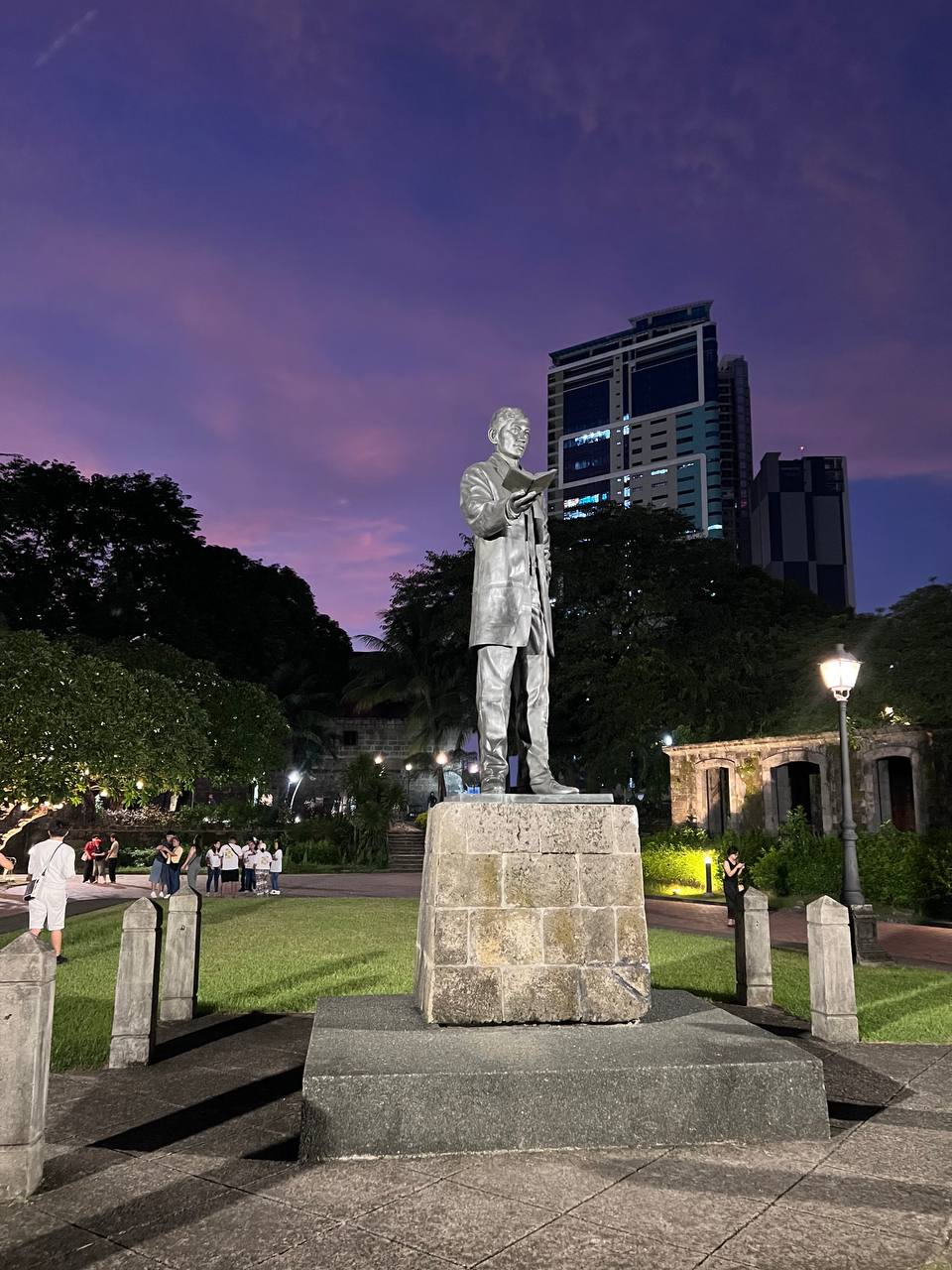
Perhaps it comes from knowing the stories connected to the place. Fort Santiago witnessed some of the most important and painful chapters of Philippine history. It served as a military fortress during the Spanish colonial period and later became closely associated with Dr. José Rizal, who was imprisoned there before his execution in 1896.
Knowing that history while walking through the fort at night changes the experience. The walls are no longer simply old structures you photograph. The pathways are no longer merely scenic places to walk. You begin imagining the countless people who passed through the same spaces generations before you. You don’t need ghost stories to make an old place haunting. Sometimes, history itself is enough.
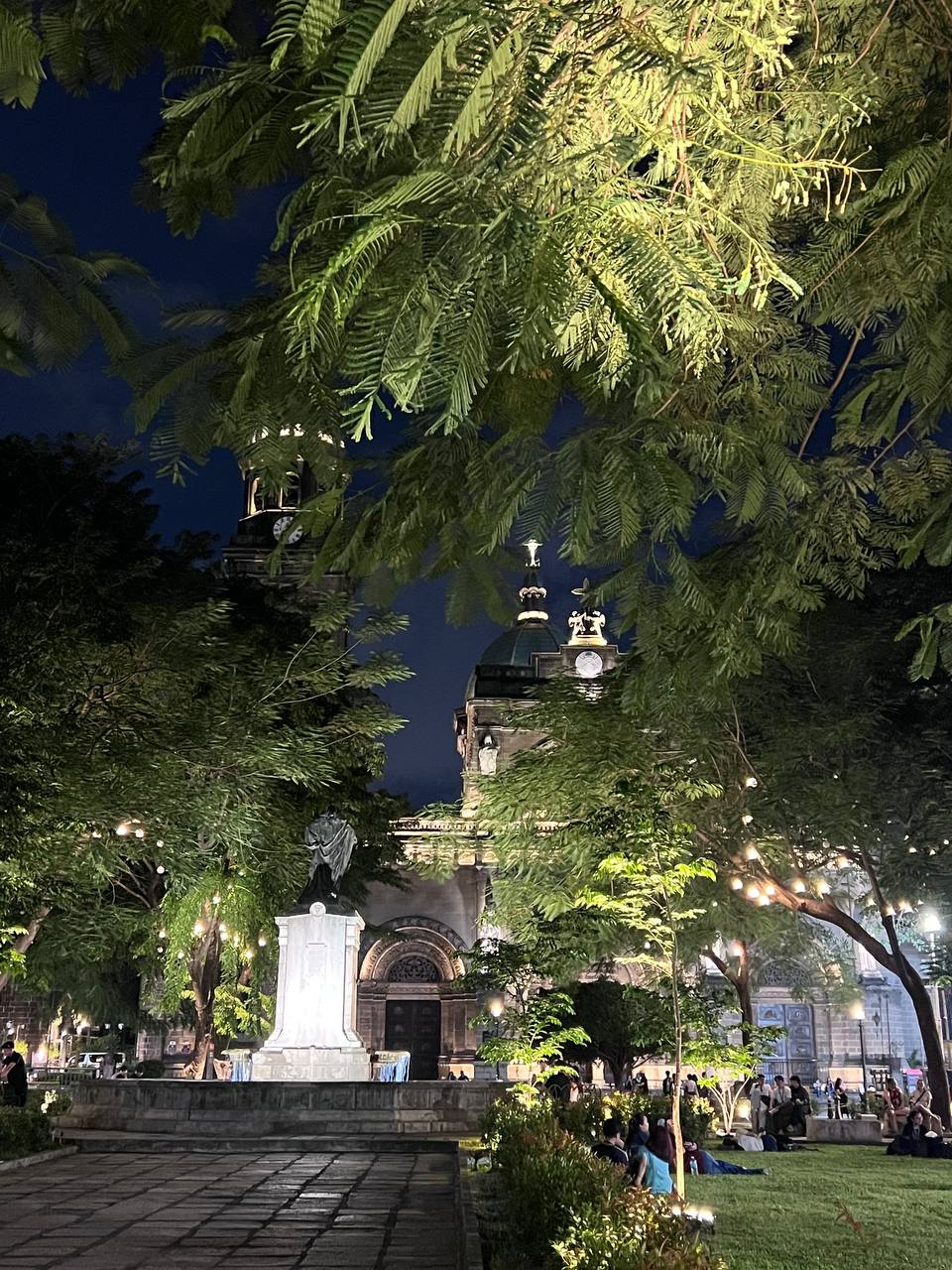
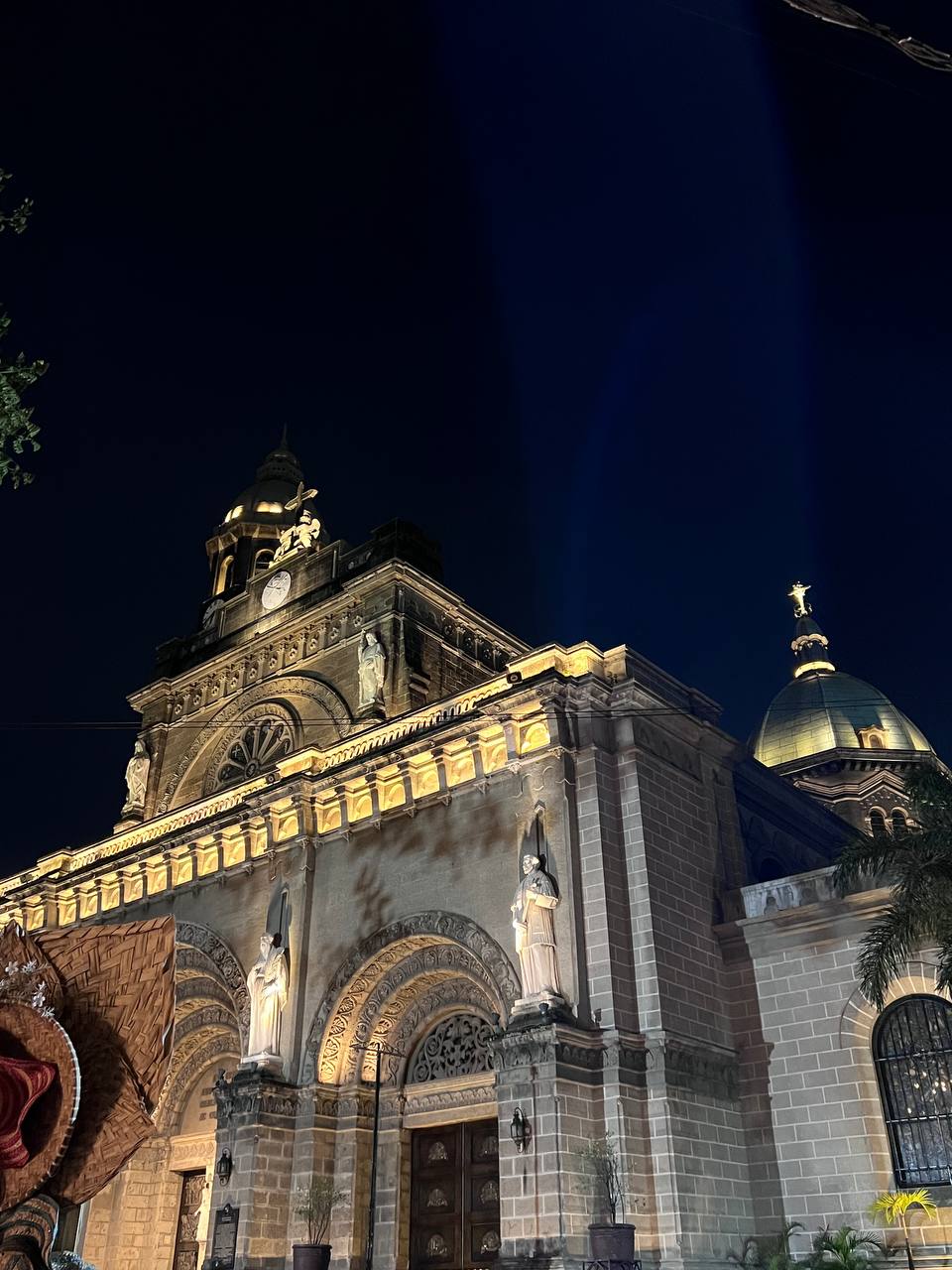
Leaving Fort Santiago and continuing toward Plaza Roma offers another beautiful side of Intramuros at night. There, the illuminated façade of the Manila Cathedral dominates the evening view. Nearby, the Ayuntamiento adds to the grandeur of the historic plaza, while farther along the streets are Casa Manila, San Agustin Church and other structures that continue to preserve pieces of Old Manila.
These landmarks are already beautiful during the day, but nighttime allows you to see them differently.
Warm lights highlight arches, windows, stone details and façades that can sometimes be overlooked during the busy daytime hours. The cooler weather also encourages you to walk more slowly. Instead of rushing from one attraction to another, you find yourself noticing smaller details—the texture of an old wall, the silhouette of a church against the evening sky, the sound of footsteps along a quiet street, or even the way the streetlights fall across the pavement. Intramuros has a way of making you slow down. And maybe that is part of its magic.
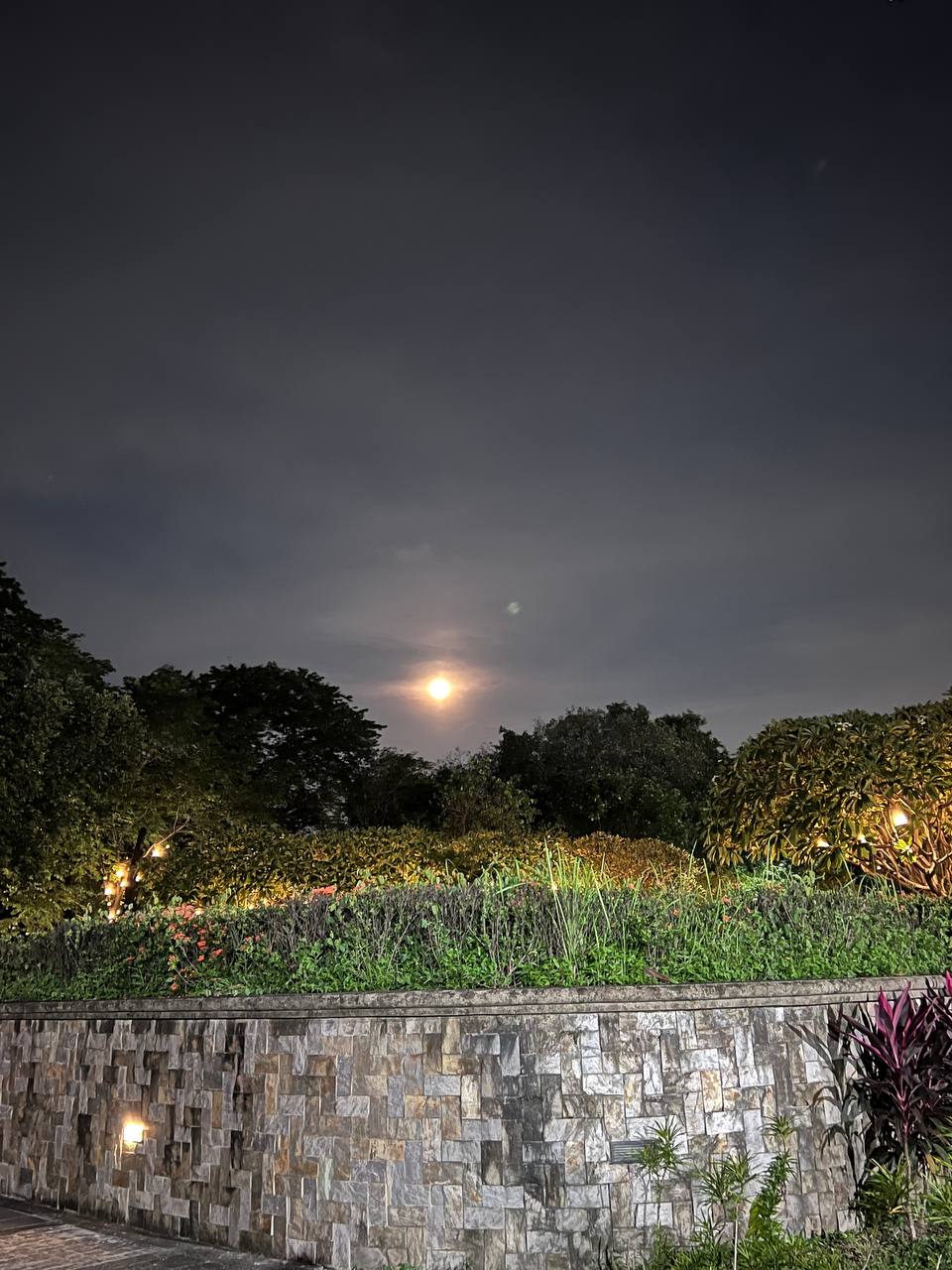
Today, there is also another reason people are staying inside the Walled City after sunset. Intramuros has developed a growing evening culture of cafés, restaurants, rooftop dining and historical tours. You can have coffee while looking at centuries-old architecture, enjoy dinner overlooking the historic district, join an evening walking tour, or simply stroll around without having a particular destination in mind. Nightlife, after all, does not always have to mean loud music, clubs and neon lights.
Sometimes, nightlife can be drinking coffee while looking at the illuminated Manila Cathedral. It can be walking around Fort Santiago as the evening breeze comes from the Pasig River. It can be having dinner overlooking the walls of Intramuros or wandering through General Luna Street while imagining what the same place might have looked like generations ago.
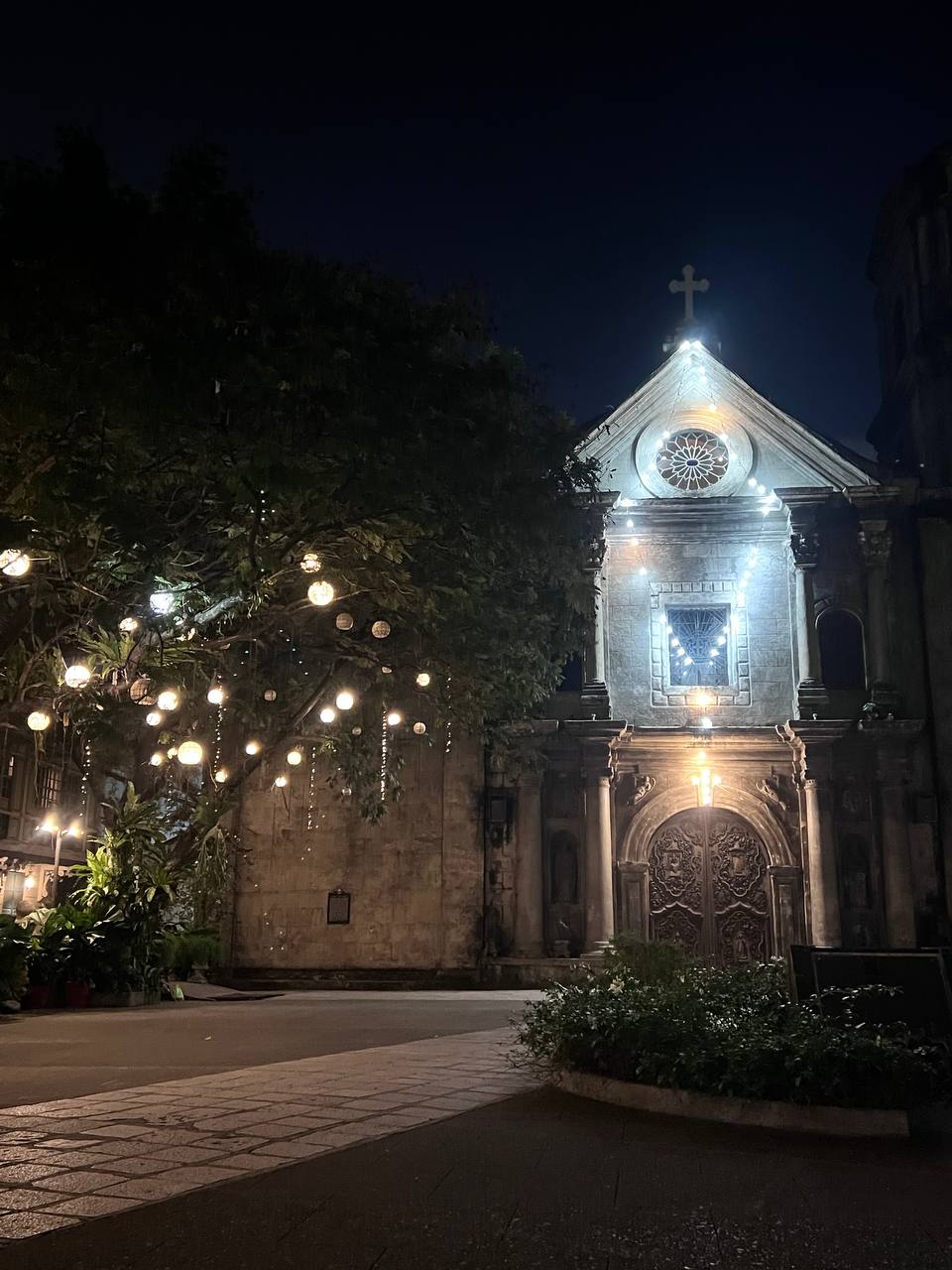
This new energy inside Intramuros also creates an interesting relationship between heritage and modern life. Cafés and restaurants bring younger visitors into historic spaces, while nighttime tours allow people to encounter Philippine history outside the usual classroom setting.
And perhaps that is one of the most encouraging things about seeing Intramuros alive at night.
People come for different reasons. Some come because they genuinely love history. Others come for the architecture. Some are photographers looking for the perfect shot, while others are couples on dates, groups of friends looking for coffee, tourists exploring Manila, or young people simply searching for somewhere interesting to spend their evening. Whatever brings them inside the walls, they inevitably encounter history.
They pass plaques bearing names they may eventually search for. They walk beside walls that have survived centuries. They stand before churches, plazas and buildings connected to stories they may have first encountered in textbooks.
History does not always have to begin inside a classroom or a museum. Sometimes, curiosity begins because a place makes you feel something. And that is exactly what Intramuros at night does for me.
When sunset settles over the walls and the lamps begin to glow, there is a brief period when everything seems suspended between eras. You see modern Manila through the phones, cafés, cars, cameras and crowds surrounding you. But at the same time, you can still feel traces of another Manila through its stone walls, old churches, plazas and fortifications.
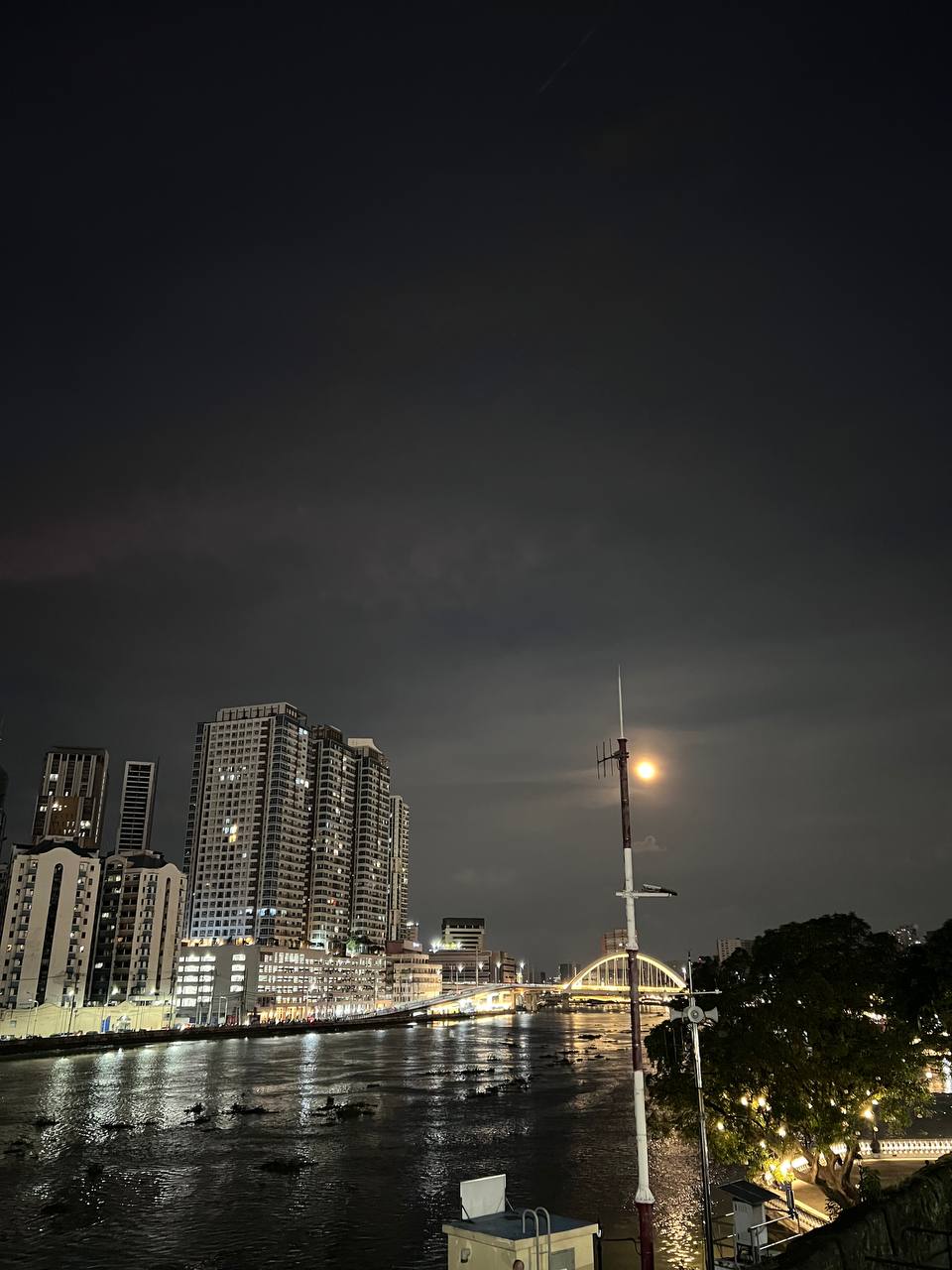
For a few hours, neither completely disappears. They simply coexist.
Maybe that is why I find something comforting about walking through Intramuros after sunset. Some people may find the darkness intimidating, but I find it nostalgic. There is something beautiful about watching daylight disappear behind Fort Santiago, standing before the Manila Cathedral beneath the evening sky, or simply wandering through the streets while the old structures around you slowly light up.
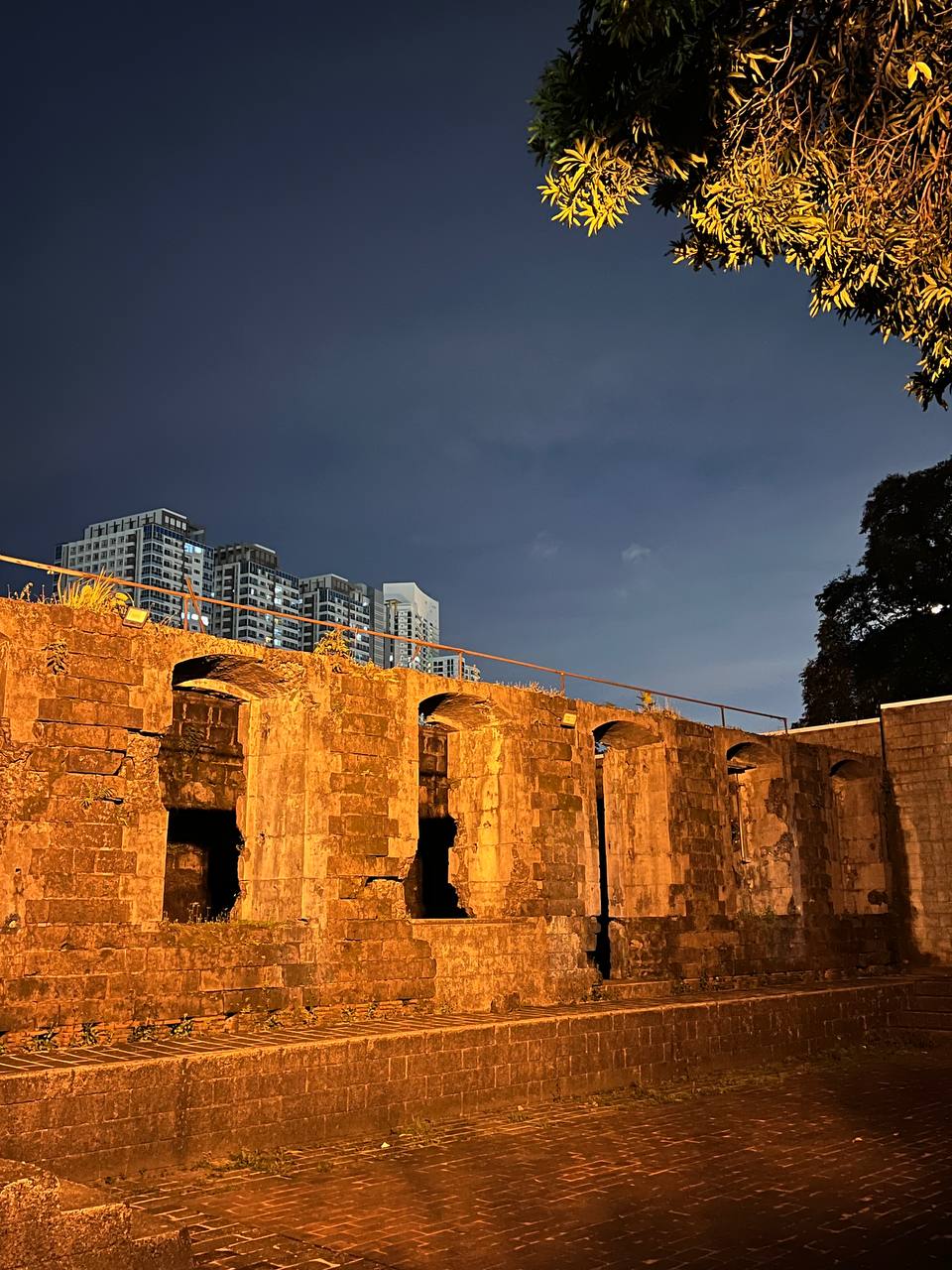
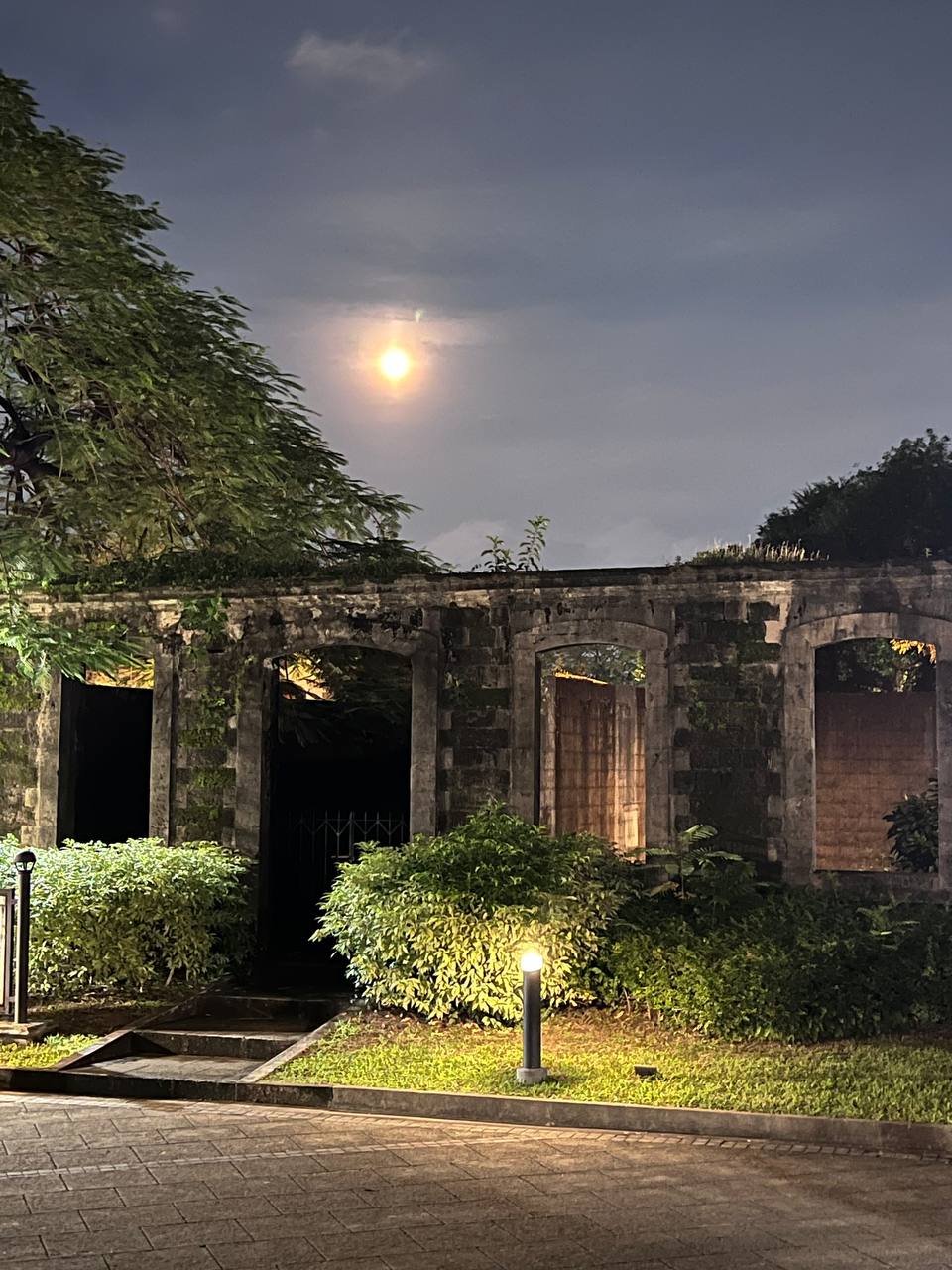
You know you are still standing in present-day Manila, surrounded by people living their ordinary modern lives. Yet somehow, for a fleeting moment, Old Manila does not feel so distant.
And perhaps that is the true beauty of Intramuros after dark. You are not merely looking at history from behind museum glass or reading about it from the pages of a book.
For a little while, it feels as though you are walking alongside it.