
MANILA, Philippines — German financial institution Deutsche Bank has raised its full-year inflation forecast for the Philippines to 5.9 percent in 2026, following the faster-than-expected increase in consumer prices in October.
The revised projection reflects growing price pressures, particularly from higher energy and transportation costs, although the bank believes the latest inflation surge does not necessarily indicate a widespread increase in prices across the economy.
Philippine inflation accelerated to 7.8 percent in October, its highest level in 44 months, exceeding Deutsche Bank’s earlier estimate and market expectations of 7.6 percent.
According to Deutsche Bank economist Junjie Huang, the increase was largely driven by higher energy-related expenses, including utilities and transportation, which outweighed the slight decline in food prices.
Despite the acceleration, Huang noted that price increases were becoming less widespread across consumer goods and services. The bank’s inflation diffusion index declined to 75 in October from 85 in September, suggesting that the latest surge was concentrated in specific sectors rather than affecting prices across the board.
Deutsche Bank expects inflation to average 7.2 percent during November and December, bringing its full-year 2026 forecast to 5.9 percent, up from its previous projection of 5.7 percent.

The bank also believes that the Bangko Sentral ng Pilipinas’ (BSP) 50-basis-point policy rate increase in October may be sufficient for now, allowing previous monetary policy adjustments more time to take effect.
Huang cautioned that another interest rate increase in December could further weaken domestic demand, particularly as households and businesses continue to face elevated living and operating costs.
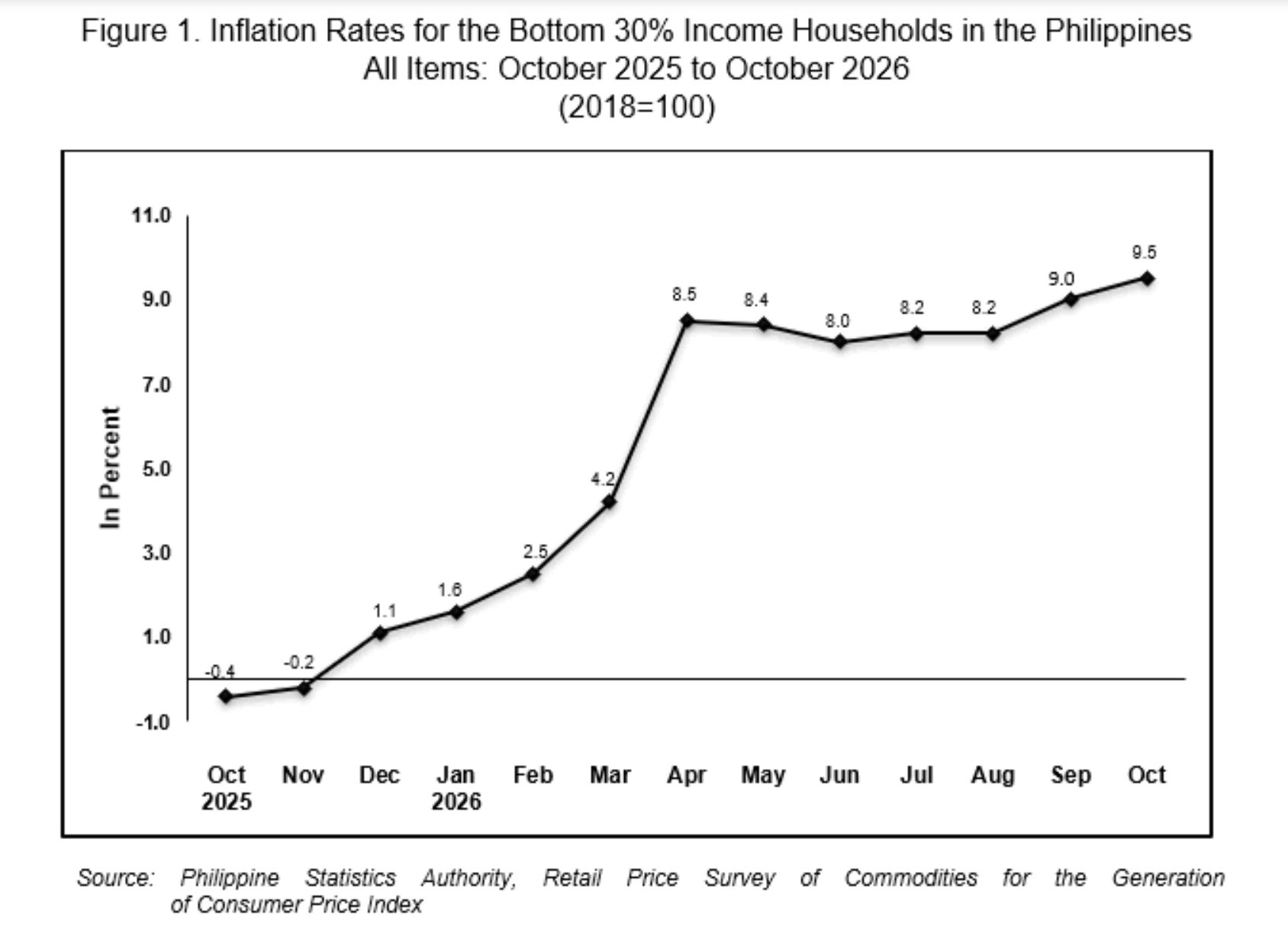
Meanwhile, the outlook highlights the continuing challenge of balancing price stability with economic activity as the country enters the final months of 2026.
For Filipino consumers, sustained inflation means continued pressure on household budgets, particularly for transportation, electricity, and other essential expenses. The coming months will be crucial in determining whether easing global energy prices and improving supply conditions can help moderate domestic price increases.
Source: Philippine Daily Inquirer, Deutsche Bank research, and related economic reports.