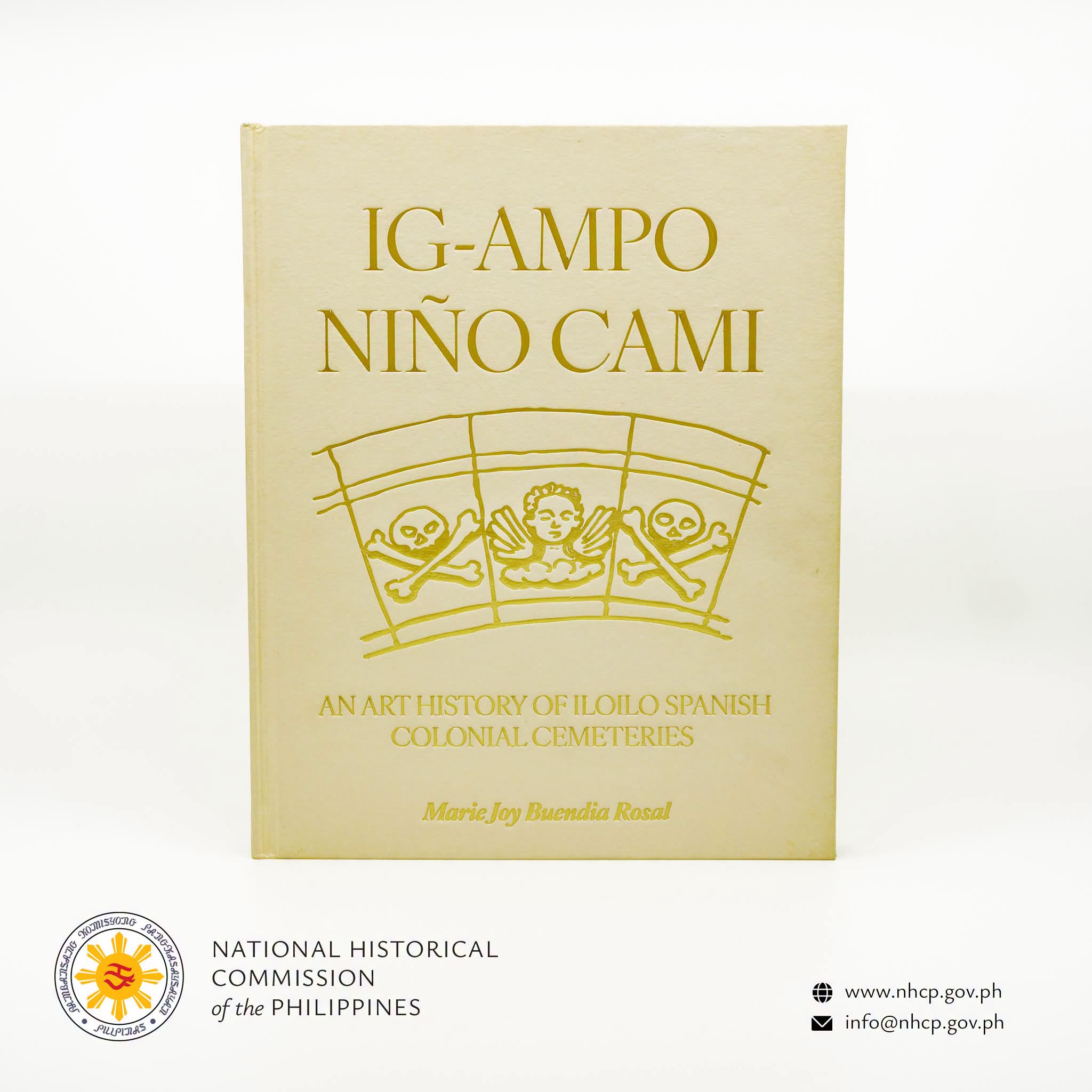

ILOILO CITY, Philippines — The National Historical Commission of the Philippines (NHCP) is bringing attention to an often-overlooked part of the country’s architectural and cultural heritage with the launch of Ig-Ampo Niño Cami: An Art History of Iloilo Spanish Colonial Cemeteries, a new publication by art historian Marie Joy Buendia Rosal.
The book is set to be formally launched today, October 6, 2026, at the MACH Performance Hall of the University of the Philippines Visayas in Iloilo City.
Published by the NHCP, Ig-Ampo Niño Cami explores the history, architectural forms, artistic details, and symbolism of eight surviving Spanish-period cemeteries across Iloilo: Oton, Dingle, Janiuay, Santa Barbara, Pototan, Cabatuan, San Joaquin, and Miag-ao. Together, these heritage sites offer a glimpse into the religious and funerary culture that developed in Iloilo during the Spanish colonial period.
Rediscovering history beyond churches and ancestral homes
While much of the discussion surrounding Iloilo’s colonial heritage has traditionally centered on its centuries-old churches, ancestral houses, plazas, monuments, and other landmarks, Rosal’s work turns the spotlight toward another important part of the province’s built heritage: its historic cemeteries.
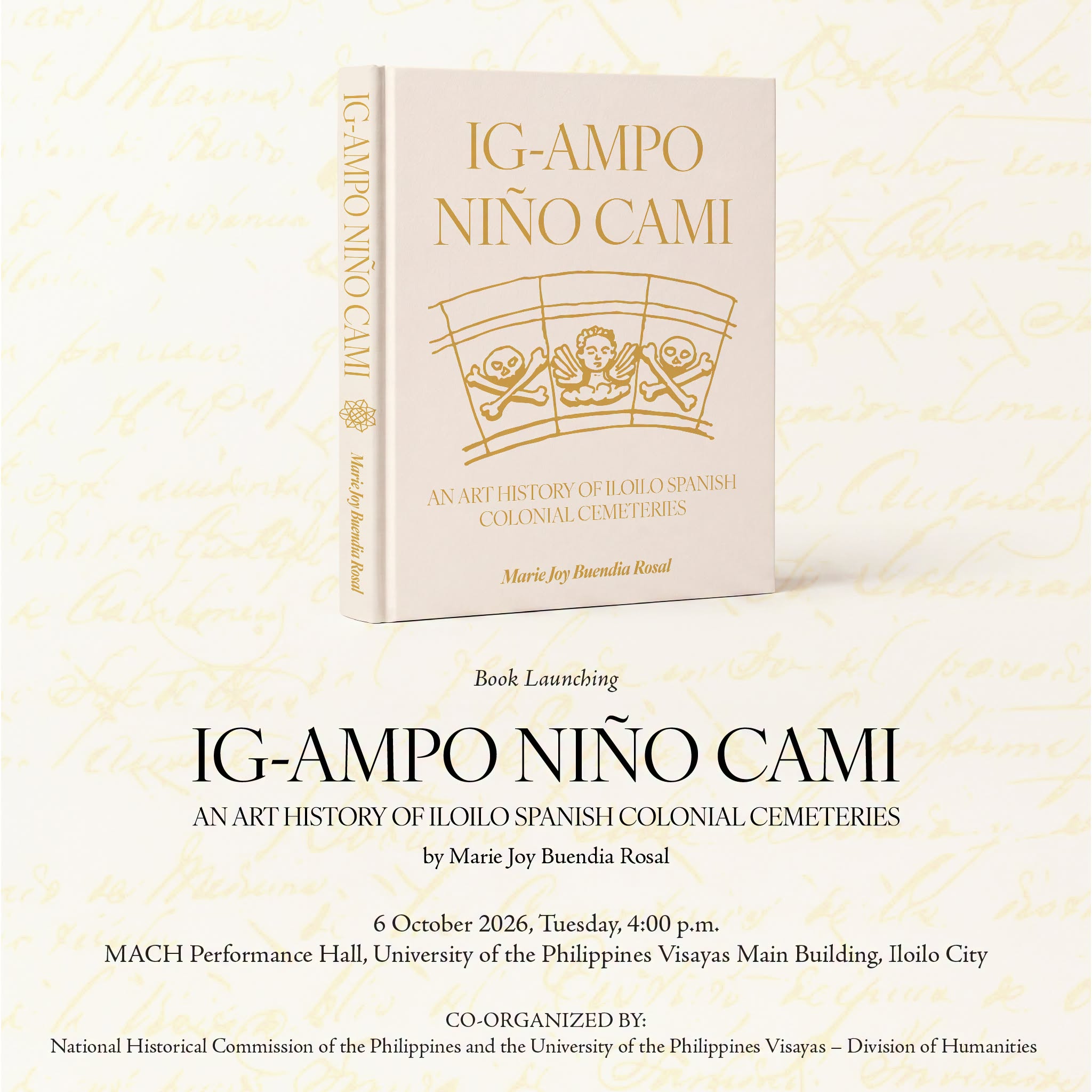
The publication examines these burial grounds not simply as resting places for the dead, but as spaces shaped by faith, memory, artistry, architecture, and community. Through their structures and decorative elements, the cemeteries provide another window into the beliefs, traditions, and artistic expressions of communities during the colonial era.
Drawing on archival research and art historical analysis, Rosal presents the surviving stone cemeteries as significant examples of Philippine colonial art and architecture deserving of greater study, recognition, and preservation.
The publication also has roots stretching back more than three decades. According to the NHCP, Ig-Ampo Niño Cami is based on Rosal’s 1995 master’s thesis at the University of the Philippines, representing the renewed publication of what the agency describes as a pioneering scholarly undertaking.
Through the illustrated volume, readers are invited to look beyond Iloilo’s better-known heritage landmarks and discover how cemeteries can tell stories about the people, communities, beliefs, craftsmanship, and artistic traditions of their time.
Book now available to the public
Ig-Ampo Niño Cami: An Art History of Iloilo Spanish Colonial Cemeteries is now available for purchase for ₱1,100 per copy.
Interested readers may contact the NHCP Property Section at (02) 5335-1209, Mondays to Thursdays except holidays, or email property@nhcp.gov.ph for orders and inquiries.
NHCP marks anniversary with nationwide history on the bookshelf
History enthusiasts will also have another opportunity to expand their collections later this month as the NHCP celebrates its Anniversary Week with a special booksale.
From October 19 to 23, 2026, all NHCP books will be offered at a 10 percent discount from 9 a.m. to 4 p.m. at the NHCP Building along T.M. Kalaw Street in Ermita, Manila.
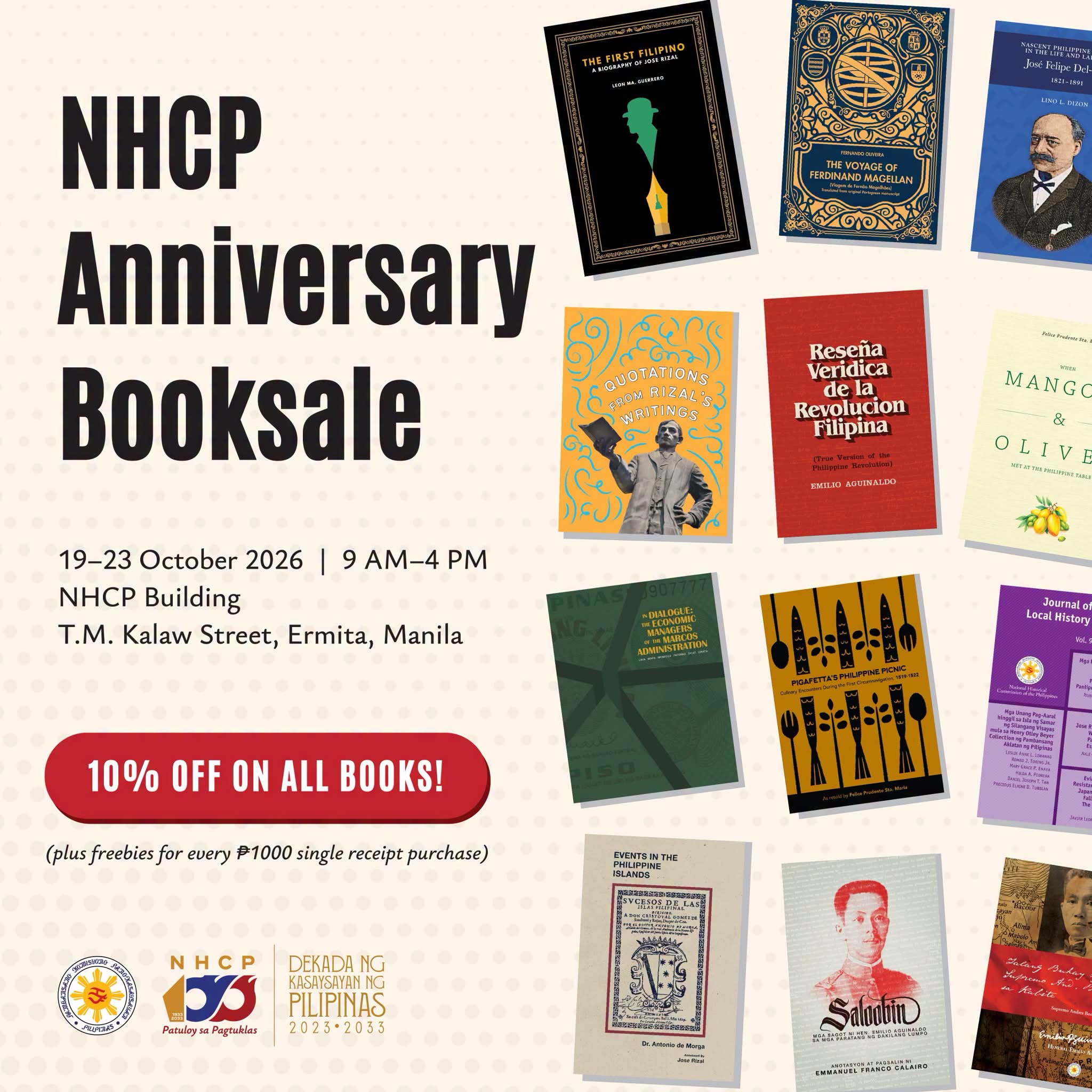
The sale covers publications on Philippine history, biographies, local history, historical sources, cultural heritage, and other topics published by the commission. Customers who spend at least ₱1,000 in a single receipt will also receive freebies.
The anniversary booksale offers readers, researchers, students, and history enthusiasts an opportunity to discover more works on the Philippines’ past while supporting the continued publication and preservation of the country’s historical scholarship.
As the government agency tasked with promoting and preserving Philippine history and heritage, the NHCP carries out historical research and publication, conservation initiatives, heraldry work, administration of national shrines and museums, and the preservation and marking of historic sites and structures. PR – NHCP LAUNCHES NEW PUBLICAT…
Source: National Historical Commission of the Philippines (NHCP)