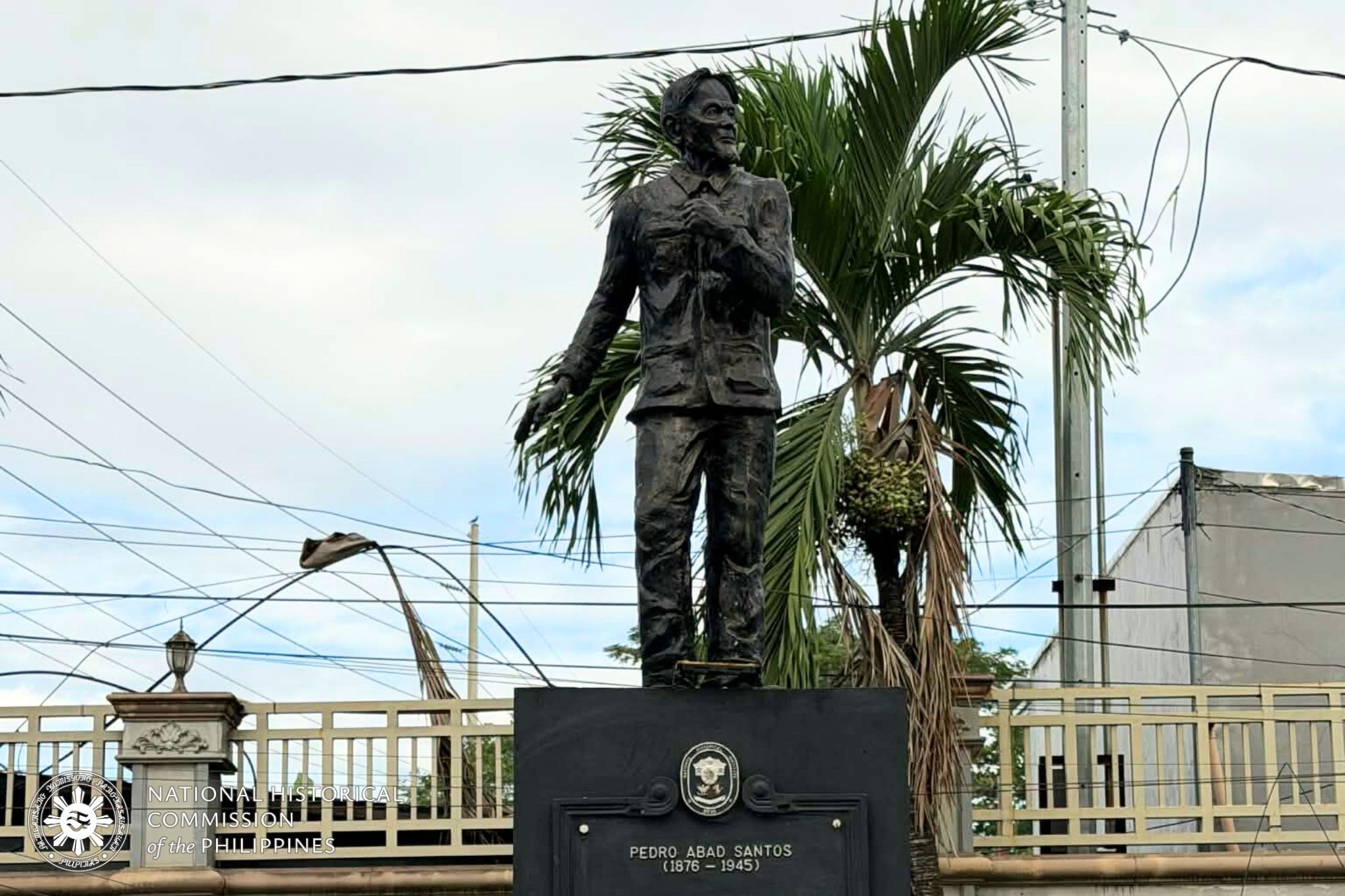

CITY OF SAN FERNANDO, Pampanga — The National Historical Commission of the Philippines (NHCP) joined the City Government of San Fernando in commemorating the 150th birth anniversary of revolutionary, lawyer, and labor leader Pedro Abad Santos on Thursday morning, January 29, 2026, at the Heroes Hall of the City of San Fernando, Pampanga.
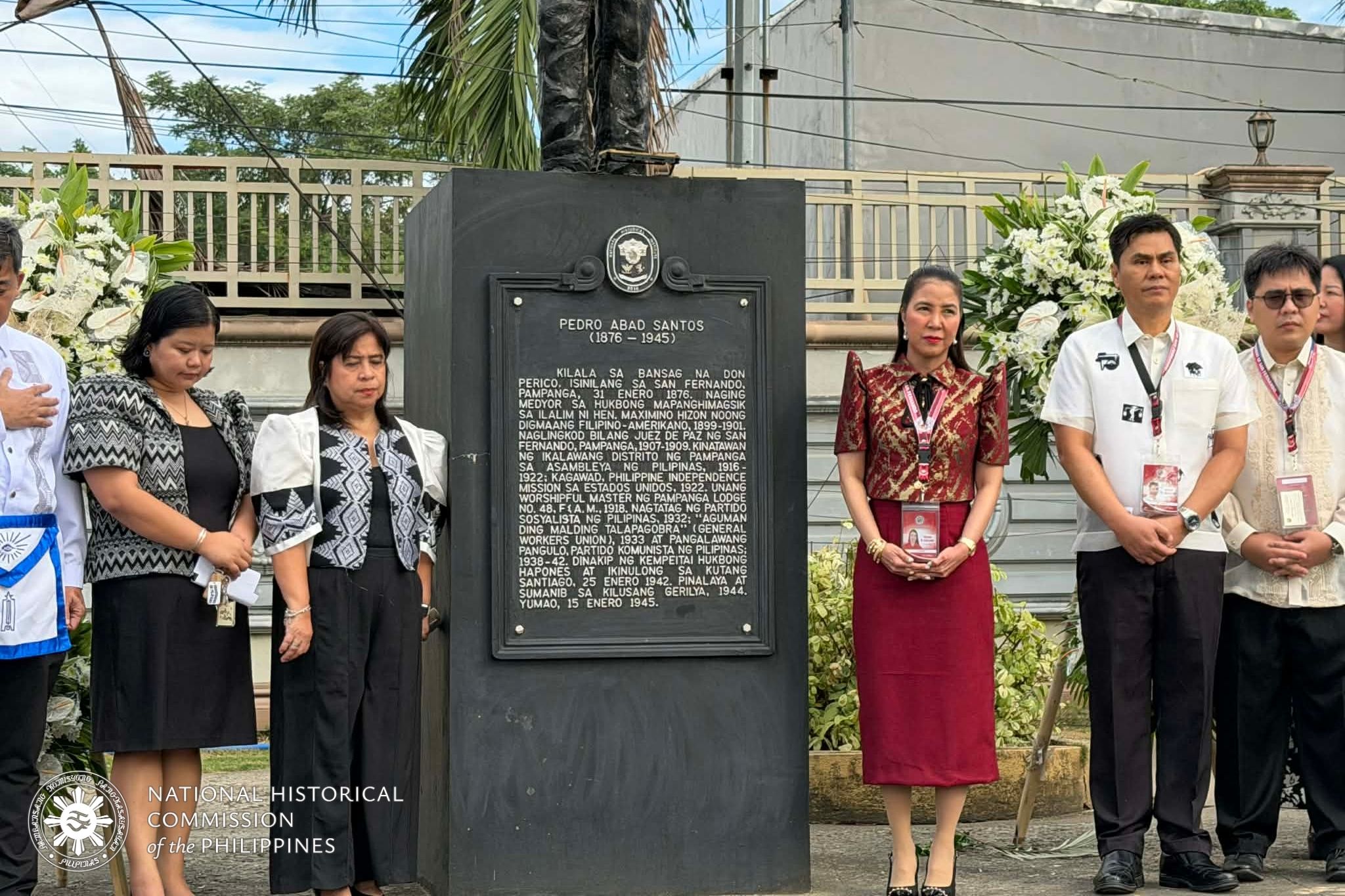
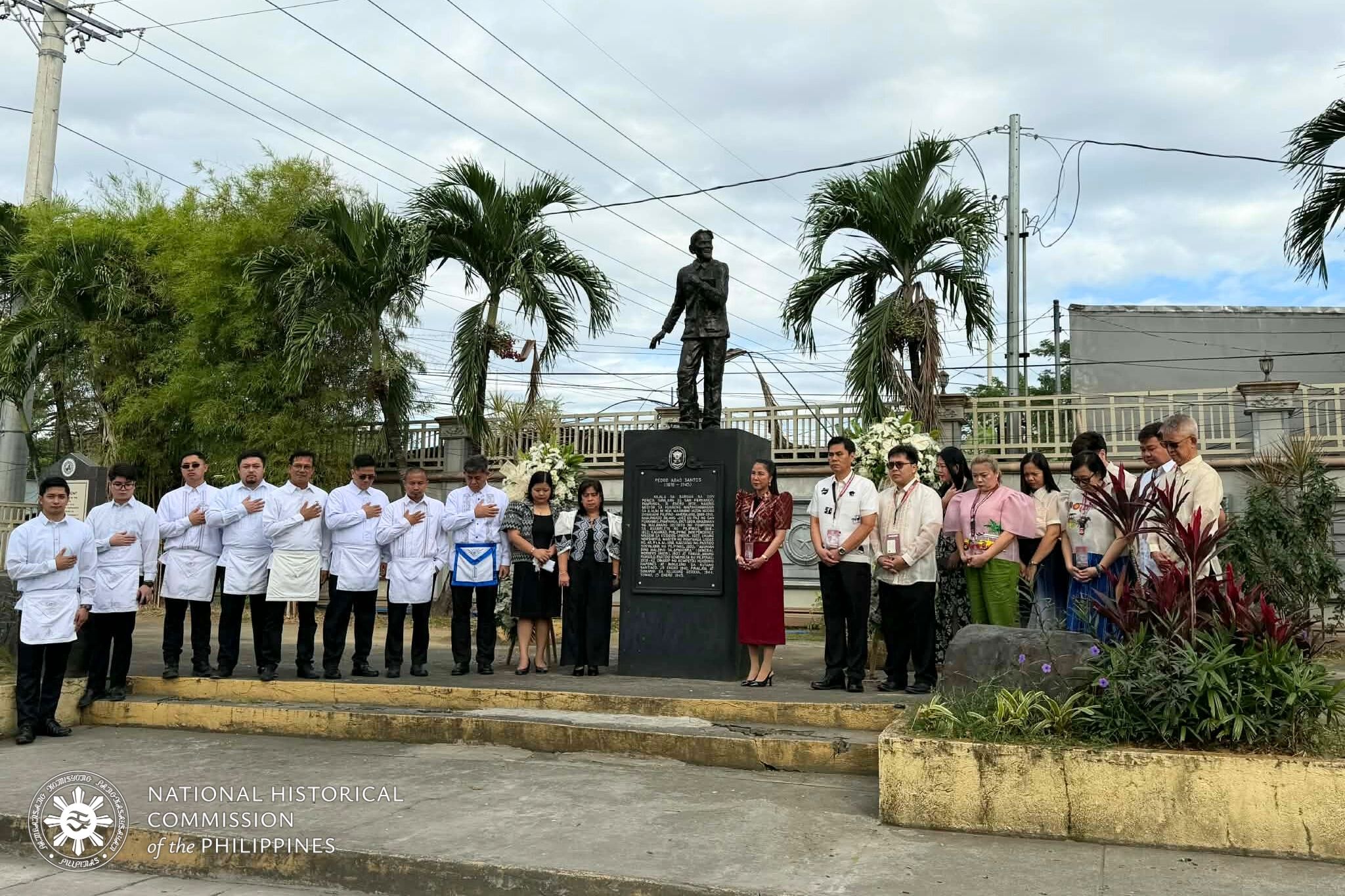
The ceremony was highlighted by a wreath-laying activity at Abad Santos’ historical marker, led by NHCP Executive Director Carminda R. Arevalo, together with San Fernando Mayor Vilma B. Caluag, Vice Mayor Aurelio Brenz Gonzales, members of the Abad Santos family, representatives from the Pampanga Masonic Lodge No. 48, and various civic organizations. Mayor Caluag also delivered a message honoring Abad Santos’ enduring legacy in the country’s struggle for social justice.
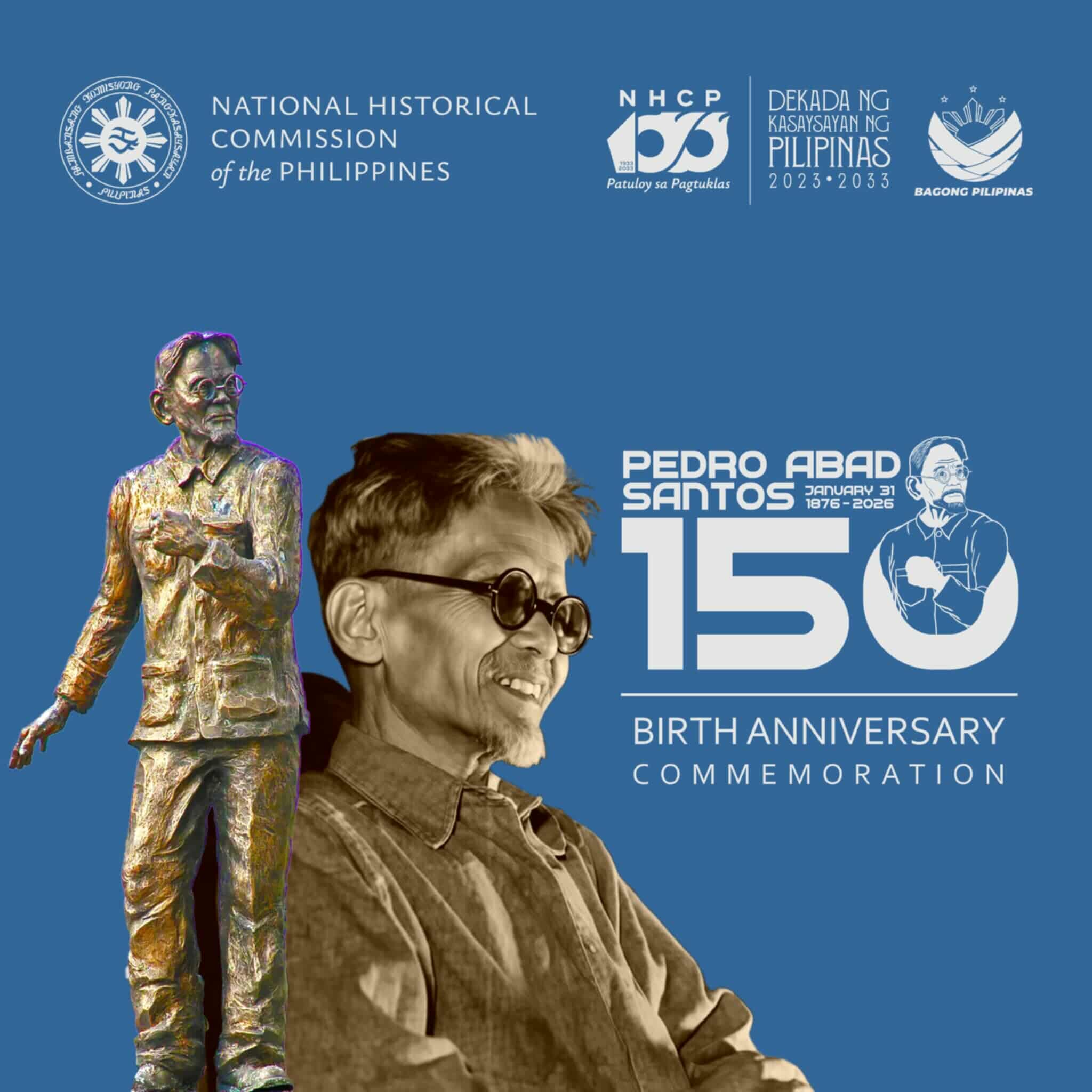
Born on January 31, 1876, in Pampanga, Pedro Abad Santos—also known as “Don Perico”—began his revolutionary journey as a member of the Kataas-taasan, Kagalang-galang na Katipunan ng mga Anak ng Bayan (KKK). He served as a major in the revolutionary movement and later continued the fight for Philippine independence during the Philippine-American War as chief of staff to Gen. Maximino Hizon.
Following the war, Abad Santos served as provincial fiscal and local magistrate in San Fernando, Pampanga. During this period, he devoted his legal services to workers and poor farmers, laying the groundwork for his lifelong advocacy for labor and peasant rights.
He is widely recognized as the founder of the Partido Sosyalista ng Pilipinas (PSP), which later merged with the Partido Komunista ng Pilipinas (PKP) to form the Partido Komunista ng Pilipinas–1930 (PKP-1930). Throughout his career, Abad Santos played a key role in organizing some of the country’s earliest labor unions and peasant movements, particularly in Central Luzon, where they pushed for land reform and social justice.
Like his brother, former Chief Justice Jose Abad Santos, Pedro was arrested by Japanese forces during World War II. He was imprisoned at Fort Santiago from 1942 until his temporary release in 1944 due to failing health. Afterward, he went into hiding and reportedly joined guerrilla movements until his death on January 15, 1944. Although he was buried in Minalin, Pampanga, the exact location of his grave remains unknown.
NHCP officials said Abad Santos’ life reflects the depth and complexity of the Filipino people’s struggle—not only for freedom, but also for equality, dignity, and social reform.