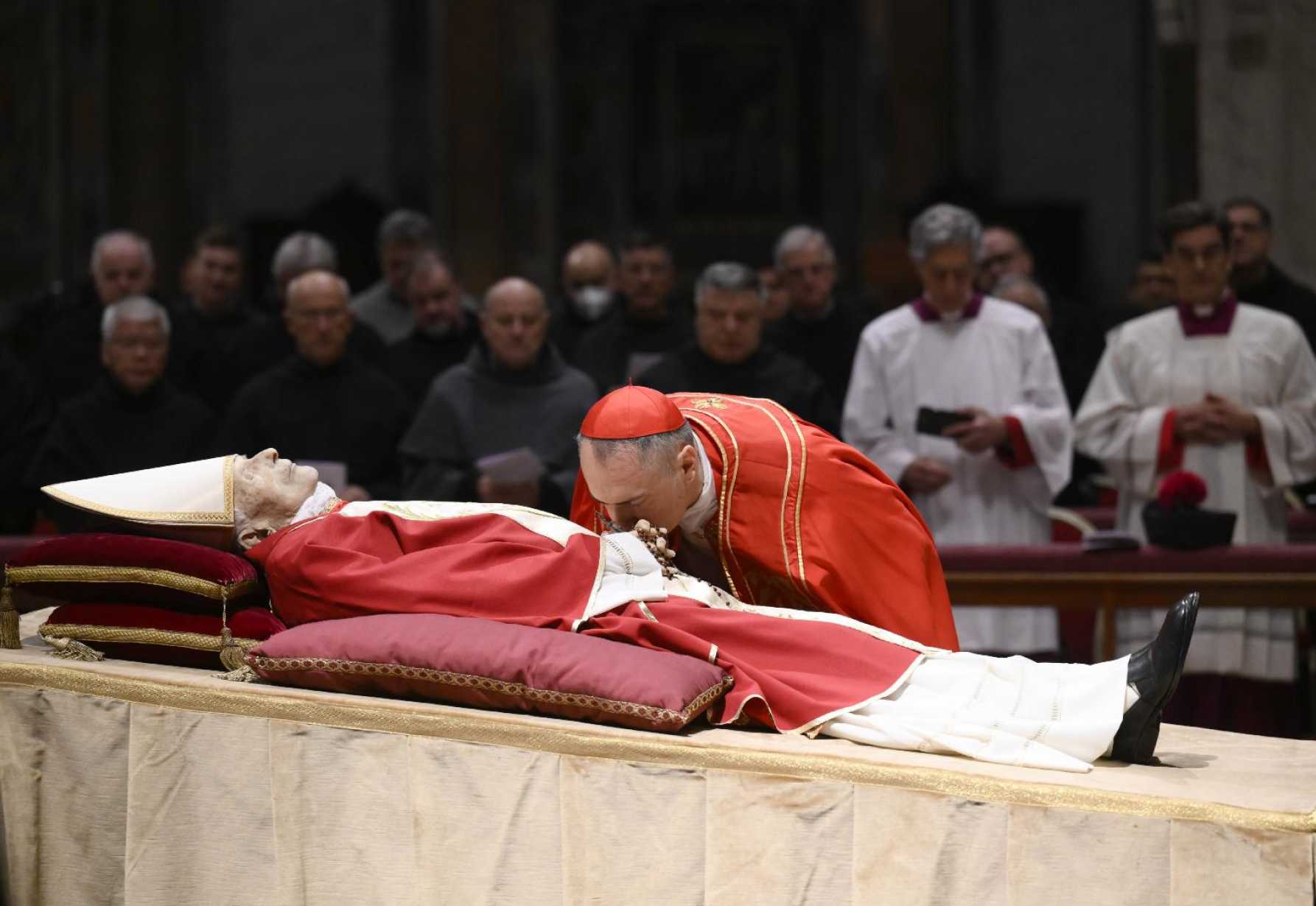

VATICAN CITY — Tens of thousands of mourners gathered in St. Peter’s Square for a rare and historic event as Pope Francis presided over the funeral Mass for his predecessor, Pope Emeritus Benedict XVI. The ceremony, the first time in over two centuries that a reigning Pope has led the funeral for his predecessor, concluded the unprecedented decade in which a retired and a current pontiff lived side-by-side in the Vatican.
As pallbearers carried the simple cypress coffin, adorned only with the former Pope’s coat of arms, out of the basilica and before the altar, the crowd erupted in applause. The somber service saw Pope Francis, seated for most of the Mass due to a knee ailment, offer a homily that focused on Christ’s wisdom and devotion, making only fleeting reference to Benedict himself. He did, however, conclude the service by solemnly blessing the casket and briefly touching it in silent prayer before it was taken away for a private burial.
The poignant atmosphere was charged with an echo from the past as some faithful in the square shouted “Santo Subito!”—Italian for “Sainthood Now!”—as the ceremony ended. This spontaneous demand for the late pontiff to be canonized immediately was the same phrase used by crowds following the 2005 funeral of Benedict’s charismatic predecessor, Pope John Paul II, who was later canonized. The former Pope, a renowned theologian who stunned the world by resigning in 2013, ending a 600-year tradition, was laid to rest in the crypt beneath St. Peter’s Basilica.

Effect on Filipino Society in 2025
While Benedict XVI’s death occurred in late 2022, the calls for his immediate sainthood—and his conservative theological legacy—will continue to have a discernible, though generally reinforcing, effect on Filipino society into 2025, given that the Philippines is the largest Catholic nation in Asia.
1. Reinforcement of Conservative Catholic Stances: Benedict XVI was a fierce opponent of relativism and a strong advocate for traditional Catholic doctrine on matters of faith and morals, including the sanctity of life and the integrity of marriage. In 2025, his legacy will continue to empower the Catholic hierarchy and conservative lay groups in the Philippines to strongly oppose measures they view as secularizing, such as any potential pushes to liberalize laws concerning reproductive health, divorce, or LGBTQ+ rights. Cardinal Advincula of Manila specifically praised Benedict for his “courageous battle” against relativism, a message that continues to resonate with Filipino bishops.
2. Focus on Theological Depth and Orthodoxy: The former Pope’s reputation as a great theologian will likely fuel continued emphasis on catechesis and doctrinal purity within the Church in the Philippines. Filipino clergy, many of whom were appointed by Benedict, will uphold his emphasis on “friendship with Jesus Christ” and Catholic tradition, reinforcing the orthodox roots of Filipino faith. This influence may be seen in the educational curricula of Catholic schools and in pastoral messages throughout 2025, encouraging a deep, intellectual faith rather than purely devotional practices.
3. Spiritual Significance of Canonization: The persistent call for “Santo Subito” keeps Benedict’s spiritual life and works in the spotlight. For Filipino Catholics, who value the example of saints, the possibility of his canonization—especially following the canonization of Saint Pedro Calungsod under Benedict’s papacy—serves as a continued source of spiritual renewal and inspiration. The anticipation of a potential new saint will encourage prayer and reflection on his virtues, maintaining his presence and influence in the minds of the faithful throughout 2025.
With additional report: reuters.com