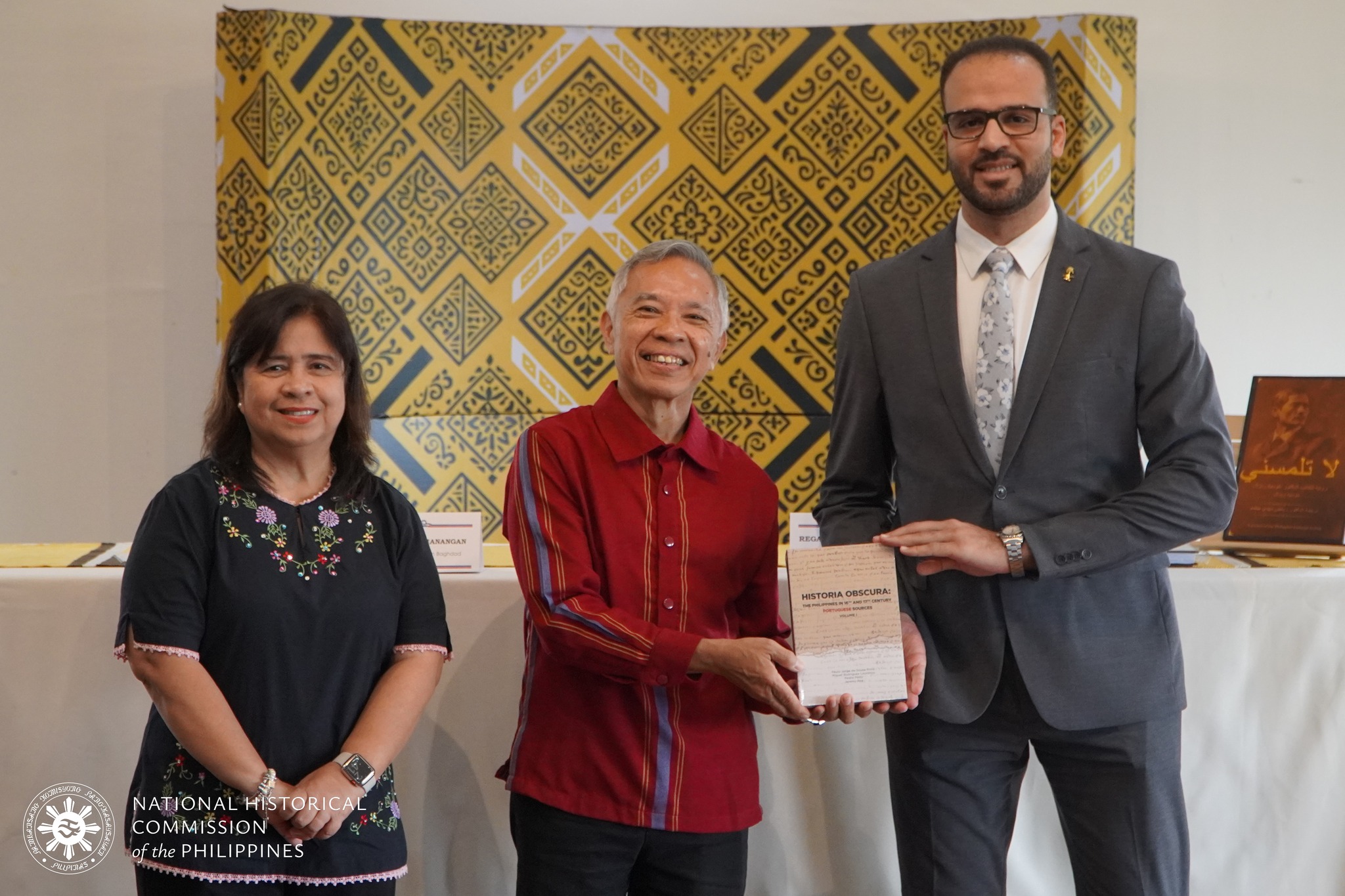
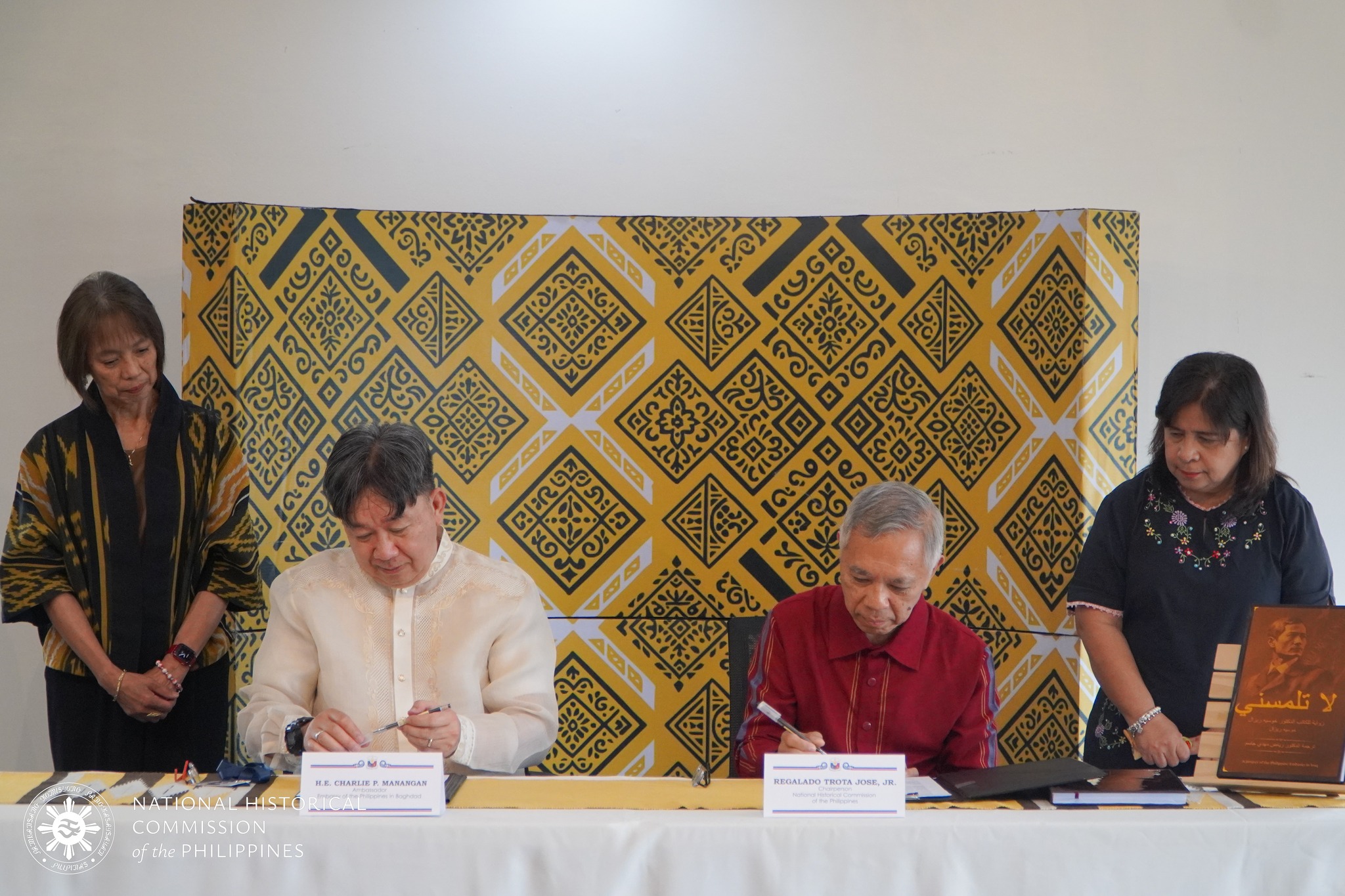
Manila, Philippines — The National Historical Commission of the Philippines (NHCP), in partnership with the Philippine Embassy in Baghdad and the Department of Foreign Affairs–Office of Cultural Diplomacy, formally signed an agreement for the Noli Me Tangere Modern Standard Arabic Translation Project earlier this week at the NHCP Building along T.M. Kalaw Avenue, Ermita, Manila.
The project aims to make Dr. Jose Rizal’s seminal novel accessible to Arabic-speaking audiences, strengthening cultural ties between the Philippines and the Arab world while highlighting the country’s shared historical connections with Muslim communities across Southeast Asia and the Middle East.
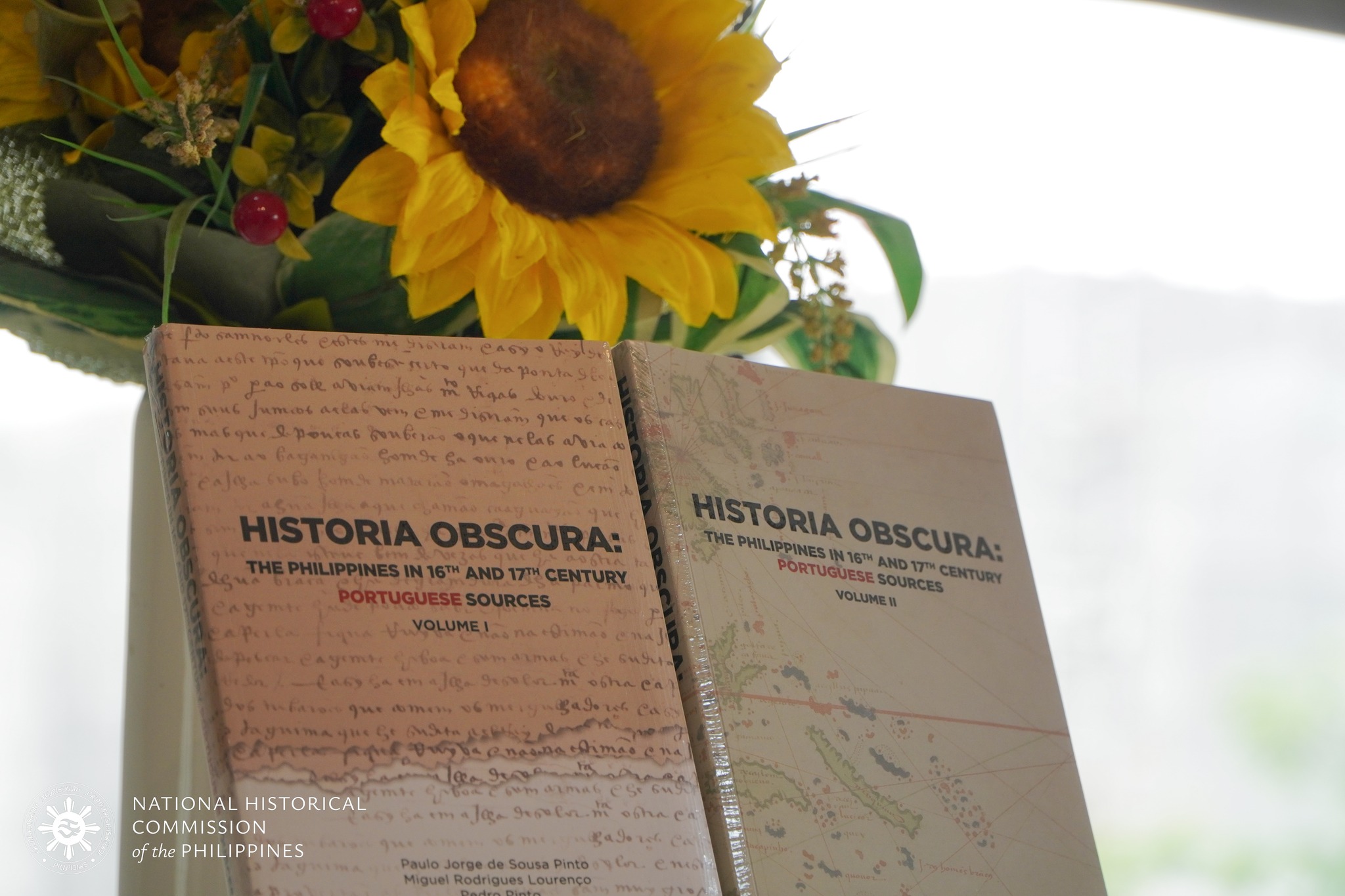
The signing ceremony was followed by the official launch of “Historia Obscura: The Philippines in the 16th Century and 17th Century in Portuguese Sources, Volumes 1 and 2,” authored by Paulo Jorge de Sousa Pinto, Miguel Rodrigues Lourenço, Pedro Pinto, and Jeremy Roe. The two-volume work sheds light on lesser-known aspects of early Philippine history as recorded in Portuguese archives, offering new perspectives on the country’s global interactions during the colonial period.
Both initiatives are part of a broader cultural and historical framework in line with upcoming national commemorations, including the 2030 Year of Philippine Muslim History and Heritage and the Dekada ng Kasaysayan 2026: Year of Philippine Diplomatic History and Diaspora. These programs seek to promote a more inclusive, global, and interconnected understanding of Philippine history.
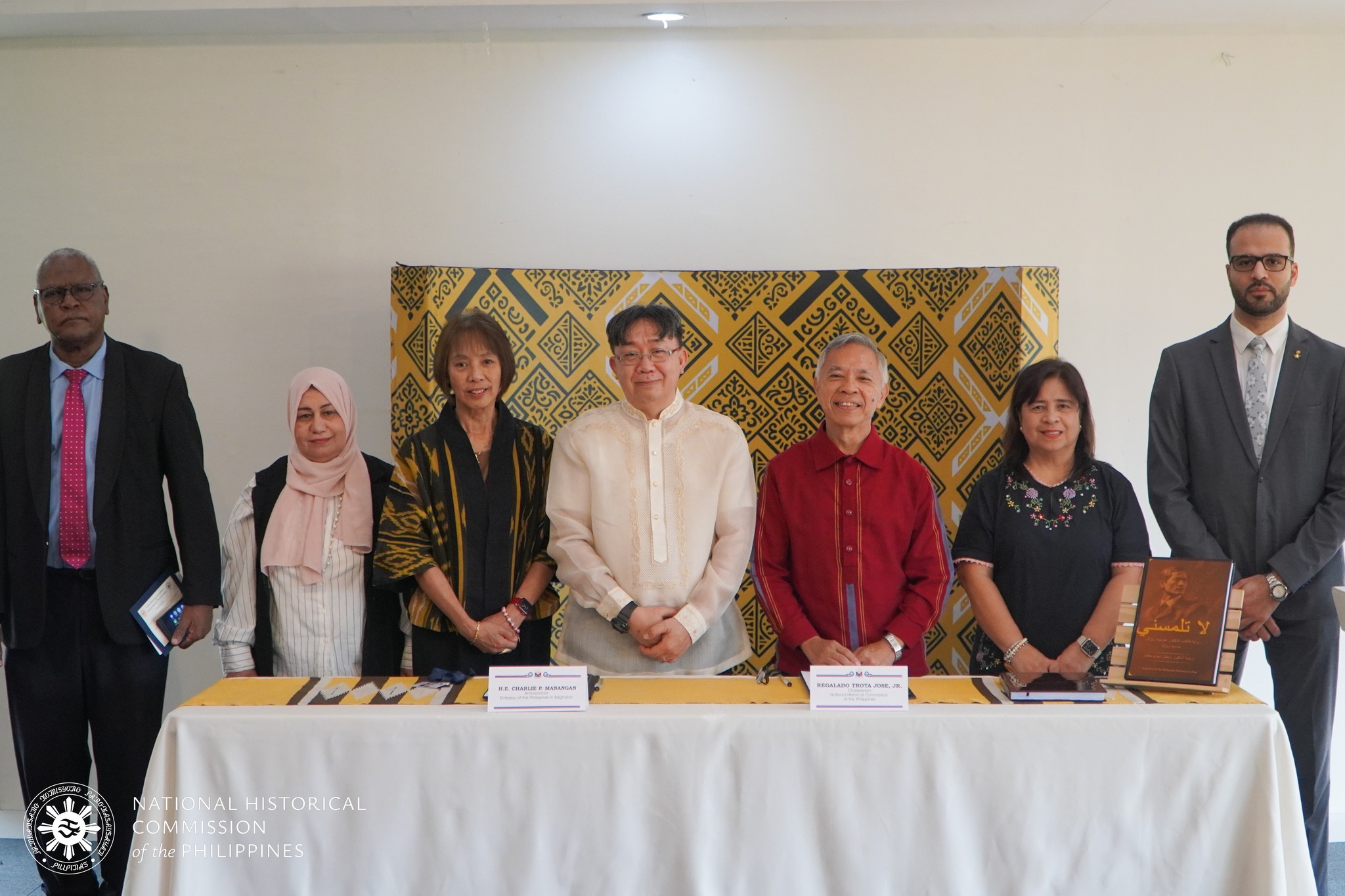
The event was attended by representatives from the embassies of Libya, the Kingdom of Saudi Arabia, Portugal, and Qatar, as well as delegates from major academic and cultural institutions. Among those present were representatives from the Quezon City Public Library, City of Manila Library, Far Eastern University, University of Santo Tomas, University of the Philippines–Diliman, and the National Library of the Philippines.
Through these collaborations and scholarly initiatives, the NHCP continues to advance historical research, cultural diplomacy, and international cooperation—bridging nations through shared heritage and the written word.